Ep 172 | Emerald waters = big green careers for boat techs!
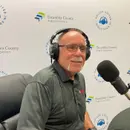
Send us Fan Mail How can six different courses be taught within one program? What does computer technology have to do with boats? What benefits are students graduating with? Stefan Schmitt is the marine service technology instructor at George Stone Technical College, recognized by Yamaha as the top US school for student job placement. He is also the host of BoatSmart on NewRadio Pensacola. In this episode, he gives us an insider look into the program, students and industry. Guest: Stefan Schm...


How can six different courses be taught within one program? What does computer technology have to do with boats? What benefits are students graduating with?
Stefan Schmitt is the marine service technology instructor at George Stone Technical College, recognized by Yamaha as the top US school for student job placement. He is also the host of BoatSmart on NewRadio Pensacola. In this episode, he gives us an insider look into the program, students and industry.
Guest: Stefan Schmitt https://gstc.escambiaschools.org/programs/programs/marine-service-technologies | https://www.youtube.com/@TricksoftheTrade2025
Vote for Voices United in Education as "Best Podcast" 2026 in InWeekly's Best on the Coast! https://form.jotform.com/261185754425158
This helps connect local families with the resources they need & the stories that get missed.
Learn more about Escambia County School District: https://www.escambiaschools.org/
Find additional links: https://www.voicesunitedineducation.com/podcast-episodes
Host: Meredith Hackwith Edwards
So when you come out of my classroom, now the pay is somewhere in the $20 range, 19, 22, 23 range. And after five or six years, it's not unreasonable to be making $86,000 to $90,000 a year with benefits.
SPEAKER_01Welcome to the Voices United in Education podcast. Each week, we showcase the teachers, administrators, and community members who go the extra mile to contribute to the success of every child in Escambia County. You'll meet the real people behind the titles and learn about the amazing resources to support your child's success. Thomas Edison is quoted as saying, opportunity is missed by most people because it's dressed in overalls and looks like work. But there is a place in Pensacola where both work and opportunity are leading the way. Yamaha just awarded George Stone as number one in the U.S. for job placement for students. And my next guest is their Marine Service Technology Instructor. Today he's going to give us an insider look into the industry's golden child of a program. It's students and the industry, giving students strong options and sharing his passion and living his purpose, Stefan Schmidt. Thanks for being here.
SPEAKER_00Oh, I love being here. Thank you for having me.
SPEAKER_01I'm so excited to talk to you about this because I feel like you absolutely live and breathe boats, like a hundred percent.
SPEAKER_00I do. I live and breathe boats, but what I really live and breathe is the fact that I'm helping other people. And that's what it's about. The boat part is the opportunity to do that. I've been in the marine industry 40 plus years, and I've been in George Stone 17 years. So that's the whole thing. It all kind of came together.
SPEAKER_01And I find your origin story of how you got to George Stone so interesting because you have a segment on the radio called Boat Smart. And the principal of George Stone was a fan, he was a listener and kept calling you until you agreed to take the job out.
SPEAKER_00It was about a three-year process. He kept calling me and calling me. He actually sent teachers to talk to me also. And so eventually I decided, you know, I'm going to interview just to see what it's about. And then it was one of them interviews where if you go in and you get a job or not, when you have a job, it's easy to interview that kind of situation. And I actually took it on the spot. I said, Yeah, you know, I think I want to do this.
SPEAKER_01That's so funny that for three years you dug in your heels and then on the spot accepted it.
SPEAKER_00Yeah, but I continued to run a business for two years after I went to Georgetown. And eventually I seen that running the business and trying to teach and that was too much on me. So I decided to just go ahead and teach.
SPEAKER_01That's incredible. And you've been there now for 17 years.
SPEAKER_0017 years.
SPEAKER_01And your students have ranged from age 16 to 70.
SPEAKER_00Yes. It's a wide range.
SPEAKER_01That is a wide range. What student stories stand out to you?
SPEAKER_00So a lot of times when students come into my classroom, I always have an introduction and I always ask them, what are your goals? My goal is to meet their goals, right? And so many times it's a person that either not happy in their career, trying to change a career to another career. And a lot of times they'll pick Marine Service. And one in particular was a chef that came into my classroom and he was working for his dad. And so many hours chefs put in. I mean, it's unbelievable. You wouldn't think so, but they're never off on the weekends. They're working late nights. It's like 15, 16, 17 hour days. They continue to work, work, work. And he was not being able to spend time with his family. So he came into my classroom and we discussed this and we decided that we're going to take this path. And with your hard work, we're going to make it happen. And now this young man is working in field, been in field maybe now five to six, seven years now, and went from being a chef working weird hours, not making good money. And now he has weekends off working at a local dealership, a master technician for Yamaha now, and pulling down big money and lots of benefits. So those are the stories that I like. When people come in, they want to change their lives. And I've got lots of them. I've had students that come in that have issues with drug and alcohol, those kind of things. And I've actually told students before, why don't you fix that before you come to class? Before you decide to take this class, and you realize after they've been in there a while, they have an addiction. And I've managed to help them down a path and have stories of where students have come back after they've taken care of the addiction and become successful in the industry.
SPEAKER_01Wow.
SPEAKER_00It's insane to the stories that come through there. You have different walks of life, different students with different education levels from VA students that are prior military. Right now I have two 16-year-olds in my class from high school, dual enrollment, those kind of things. So when you think about all the changes in their lives that we I say we, me, try to help them with and the outcome, it does get you thinking about the good you're doing in a community. Yeah.
SPEAKER_01Yeah, absolutely. Especially such a wide range of ages and backgrounds. You know, it's not like a conveyor belt of all the same circumstance with similar students.
SPEAKER_00No, it's very challenging because we have what we call open enrollment where we can take students anytime my class has a seat available every quarter or so. Okay, so we can take students in. You don't know what you're going to get when you get the students at those times. It could be two or three, it could be five, it could be an older student, a younger student, we don't know, right? And I teach six different courses in that classroom at one time. And I have students at all levels. What I've been thinking a lot this year is my ages are around the 18-year-old to a 20-something-year-old students. And that's challenging for me because a lot of times when I have a VA student in there or an older adult, they kind of help me to settle down the younger students, if that makes any sense. It kind of rounds out the class. Just by their presence? Just by their presence and the way they try to help talk to the students. They want to encourage them, right? So that happens a lot. But right now I don't have that luxury in my classroom. And it's okay, but I'm working through all the 18-year-olds and 22-year-olds that have the way they learn now is different. So I have to learn how to teach them in a different style, maybe, but also while keeping the context of not only the learning of the engines and all the things that we're supposed to teach, but also life lessons as well.
SPEAKER_01That's really fascinating. Your perspective of having done it for so long, and it's always been varied. And the industry itself, I imagine, has changed a lot, right? Because we think about vehicles, vehicles are not all nuts and bolts. They're nuts and bolts and computers. Yeah. So what's that like from that perspective for you?
SPEAKER_00Yeah. So we take the students from a very basic, we talk about tools, we talk about safety, and we start working them up through the classroom, through all these aspects of the tools and working into two-stroke engines, four strokes, and that. The part that we move to is the laptops, where these engines now, the motors, the boats, everything, they can have five, six, seven computers on board, engines talking to each other at all different levels. And the students have to learn how to set all this up. And last night we were doing that in our classroom. We had a student working on some Mercury's and had the laptop out, and then he was engaged in making that laptop talk to the engines. It was pretty neat.
SPEAKER_01That just blows my mind because I, well, I don't have a mechanical or really technological background at all. So the idea that you would, you know, showing up to a marina. I'm picturing someone showing up to a marina, walking out on a dock, and they open up their laptop. That's just a new thought for me.
SPEAKER_00It is. The laptop is part of what we do. Okay. You still have to know the very basics. The students have to learn not only to work on the engines, but they need to understand the systems on the boat. And it could be the build pumps not working, it could be running lights not working, they need to maybe install stereo or a piece of electronics. So in the marine industry, you have not only the laptop, you have to have the basics in your head. If you don't understand how an engine runs mechanically, the laptop really doesn't do you any good. So you have to understand all those aspects of that.
SPEAKER_01So I have heard that people will over their lifetime change their career up to seven times. What is the opportunity for these students who graduate and then have this set of technical skills to switch careers to something adjacent because there's more computer stuff involved?
SPEAKER_00So when you look at our field, it's really wide-ranging. But when you think about our field, it's only like 2% of the automotive type, it's only like 2% of the market, right? It's a very small market marine industry in the United States, okay? If you think about the lakes and rivers and what we have and where boats are, right? But the opportunity, once you're in that industry, you can do so many things. You can venture out, you can go work for a dealership, you can work for Mercury or Yamaha. You can actually go work at Disneyland where Mercury Marine has a big footprint at Disney World, which I did not know for until like five years ago, that they control all the boats and stuff in Disney World. Wow. Which is a different category altogether because I was speaking with the Mercury Tech down in that area and uh had to do a tour. I got to do a boat tour of Disney World, right? Down in Florida. I'm not a Disney person, but we went and it was really cool. But it was funny that he told me that the technicians have to be on stage too, in a way, because they're in that area where they have to always smile and always, you know, if they in case they run into a person that is visiting Disney World. So that's interesting. So they can do that, they can become parts personnel, they can work at these large dealerships or even small and independent dealerships. They have a lot of options.
SPEAKER_01That is fascinating. Now, you mentioned earlier that the gentleman that you talked about, who you mentioned at the beginning, he is doing very well for himself financially. Can you kind of give the audience an idea of the range of kids that are, I say kids, because like eight, sixteen, twenty, to what it could be up to?
SPEAKER_00So generally, when you come out of my classroom, we consider your entry level, you kind of go out as a helper type technician. We put you under the wings, hopefully at the dealership, under the wing of a senior technician, and they bring you up from to a different level. So your education never stops, right? So when you come out of my classroom, now the pay is somewhere in the $20 range, 19, 22, 23 range. And after five or six years, it's not unreasonable to be making $86,000 to $90,000 a year with benefits. And that's all up to the person that goes out into the field and starts working. You got to work hard. You have to want to continue your education, and you want to have to show up on time and all the stuff that goes along with that.
SPEAKER_01So, what kind of industry certifications do the students graduate with?
SPEAKER_00Okay, so at our school, we have our certifications, our Yamaha, both inline and V engine certifications, which is a maintenance certification. So they can get that. It's really not a Yamaha certification as such, but it looks good on the resume. It tells the person that's hiring you, the dealership, that you understand how to service these engines, which is really the most important part of going to work, is understanding how to service the engine. That is probably the money maker for any technician. How many services can you do in a day? And so that's part of it. We also have certificates that George Stone gives out for each individual course. OCPA, which is Marine Rigor, you get a certificate for that. That's 300 hours. The next one is 300 hours, that's the four-stroke technology. Third one is 150 hours in the course, and that is your laptop stuff. And then it goes on to inboards and stern drives, drive trains, and then, of course, a very small portion of diesel, which is 150 hours. So you get those as well.
SPEAKER_01I can't imagine someone teaching this who hasn't had the experience that you have. This must be such an extra value for your students because you're bringing the book smarts, but also the real life of running a business and knowing your stuff.
SPEAKER_00Yeah, being in the industry is why I'm able to do this. I literally had to teach myself how to teach because I didn't realize this after I accepted the position. They just throw you into that. You really have no guidance whatsoever.
SPEAKER_01Yeah.
SPEAKER_00And day one, you're looking at 22 students in your class and you're going, what do I do now? And you literally have to make that happen. Yeah. But with my business, I manage people. And some people that have worked for me in the past said, You've taught me. Why can't you teach them? You know, that kind of situation. So in the long run, I've always taught, but I didn't realize I was teaching.
SPEAKER_01That's amazing. So is the program geared more towards marine pleasure boat industry or more toward commercial marine?
SPEAKER_00It's mainly the pleasure boats. Okay. Okay. So if you look at our dealerships in our area, you're looking at boats that are anywhere from the average of 18 foot up to 25, 30 foot range, you know, those kind of boats. And then after that, yachts and things like that. So that's where we target is those areas. So it's pleasure boats, but we do have students that go out into the field. I have three right now that are on boats that are supply boats offshore supplying oil rigs right now. Because they had the education of George Stone working on mechanical things and safety and things like that, they were able to get those jobs. And one of my students actually was on the boat for a week and said he helped them troubleshoot an alternator or something, you know. So that's pretty cool.
SPEAKER_01Wow. So he was kind of the shining star in that situation.
SPEAKER_00Yep.
SPEAKER_01I was surprised to learn that the investment of industry is such a prominent piece of this program with Yamaha and Mercury and some Suzuki, right? Providing engines and curriculum and even visiting the classroom.
SPEAKER_00Yeah, I couldn't do this without my business partners. Okay. And that includes the dealerships in our area, both the dealerships and the independent people. But also Yamaha, Mercury, Suzuki, all of them are very involved with what we do. Yamaha came on first, okay? So they're by my heart. Okay. They have been behind me about two years in, they approached me and we started putting Yamaha product in the room. Not only do they supply product, they supply the uh actual technical guides and things that we need, online training. Then Mercury came on board and they were able to help us with that as well. They supplied engines, online training. And just last summer, Suzuki showed up with two engines and rigging, and now they're on board. And I work closely with all three companies to make all this happen.
SPEAKER_01That's incredible. I wanted to talk about the dual enrollment aspect that you mentioned earlier, because for parents listening who have children who are maybe mechanically inclined, or they think, oh, you know, this could be a good option for my child. More people are looking into technical schools and trades as viable options, not second string, but like this is a real need in the community. It represents job security. What does dual enrollment look like?
SPEAKER_00And everybody says college isn't for everybody, right? So you give a student that's in high school an opportunity to try a technical college. And we have dual enrollment, which means a student can come to our class three hours a day. They come in at 215 till 515 every day, and they go through the program. And they're technically they're in high school, but they also come to the tech school as well. So what that does not only for the student, but it also helps the industry because we're looking for people to bring in fresh into our industry, younger people into the industry. And I've had several students, we're about 50% on dual enrolled coming in as a high school student and then coming back as an adult. And 50% is a pretty good number. So if I have four students in my classroom from high school and two of them return as adults, that's a big number for us. I'm not talking about for technical schools in general, right? But also what's so good about this, I have several dual enrolled now working in field that were a year and a half ago, two years ago, were in my class and now working in field in large dealerships, making that good money and getting benefits. So that's a big part of what we do.
SPEAKER_01For the dual enrolled students, does the tuition cost, is it different than a student who graduates?
SPEAKER_00No cost for the dual enrolled. It's just like they're in high school, their books and everything, and all the supplies are taken care of. Now, if they buy tools or something, they have to take care of that. But all the books and the online curriculum, everything from Yamaha, Mercury, and all that is all free to them as long as they are a dual rolled student. So yeah, it's free.
SPEAKER_01Wow, that's so incredible. Because let's say the student is one of those people that changes career seven times during their lifetime. They're graduating high school and can hit their ground running, get some of that real life experience, and decide, okay, do I want to continue in this field, an adjacent field? Do I want to like totally switch things up and do something completely different? But they are starting ahead, it feels like.
SPEAKER_00They are starting ahead. And really, when you think about their career choices and things, I will never fault the student for coming into my class and saying, you know, this isn't for me. I think it's a great opportunity. And I will tell my students, hey, maybe you want to try a different class, maybe you want to try cybersecurity or whatever all the 25 classes that we offer out at Georgetown, so they can do that as well. So it is a good opportunity for a student, a young person to come in and decide if that's what they want to do. Many times they don't know. They're not sure. And that's the conversation I have. I really don't know if I want to do this, but by the end of it, they're going, I want to do this. Yeah. And they hear from students that are already out in the field. I bring them in and have them talk to my students and tell them what it's like. And we do field trips and we have people come in and talk to them. So we get them to where they're excited. And we want to keep them excited once we move them into the field too. So we do that as well.
SPEAKER_01See, this is what blows my mind that you didn't have a teaching profession before all of this, because you're remembering the aspect of motivation for your students. You're not like, okay, here's the information, take it or leave it, son. Right. You're remembering that this is a whole person and they need encouragement to maybe get sober, encouragement and motivation to look at the future with excitement. I just love that.
SPEAKER_00Well, I think from my experience, that's why I teach people better, maybe, because I have that experience in the field dealing with people. You know, I've hired people, had issues and stuff like that when I have my business. And I think the big part of it is that I really care about them.
SPEAKER_01Yeah.
SPEAKER_00And when you care about someone and you want them to be successful, now I'm pretty harsh, honestly. You know, my class, when I uh am upset about something, they very well are aware of it. But honestly, it's out of love and making sure that they go down the right path. And so we have many conversations, whether it's on the whole class or individually about things that maybe they hadn't done correctly. And it could be minor things, it could be major things, but I'm always having this conversation and it's always open. I want them to be able to come to me when they have a situation. And I can try to talk to them and try to help them. And if I can't help them, find somebody that can.
SPEAKER_01I want to talk technicalities before we wrap up. Do you have an idea of what the cost is for the in-state student who is not dual enrolled, even if it's a range?
SPEAKER_00So it's under $6,000 to go through my entire course. Now that's not including tools and everything. So tools are a big part of it. You have to have tools to go out to work in the field, and you have to have a good set of tools. So tools can run anywhere from, depending on where you get them and what type of tools, that could add another $6,000 to it. But really, you could do that for well under that. But around $6,000, you can go through my entire course. Within 750 hours, not even a year, I can have you working in field under a co-op program where you're working in field, now you're generating income, plus maybe you have a grant, a Pell Grant, a VA grant. You also have that coming in, and you're able to go to work in the field. You're still under my umbrella, and I get to go check on you, make sure you're doing things right. And if you're not, I'll be able to correct it or whatever. But yeah, at 750 hours, you can be working in field.
SPEAKER_01Are one of those co-op partners, the industry partners like Yamaha Suzuki and Mercury?
SPEAKER_00So through our local dealerships. Okay. So the dealerships hire them. And the dealerships that understand what we do and how they continue the education are the ones that are successful and they keep my students for a long time. The ones that think they're already a seasoned technician, it's not so successful. So they need to understand what we do and what I'm trying to do as far as getting a student into the field.
SPEAKER_01So if they see it as an investment in the community, then it's a perfect fit.
SPEAKER_00Exactly. And they know that they're going to bring that student up through another technician and continue to bring their education up to a level where they can be successful on their own, right? So that's kind of how it works.
SPEAKER_01So for a dual-enrolled student, you mentioned the hours of about three to about five. For the I would call it a traditional student, what do those hours look like for the course?
SPEAKER_00We're in school in our my area. We're in school Monday through Thursday, and they're in my classroom 6.25 hours a day. So they're from 215 till 9 o'clock at night, Monday through Thursday. So you're looking at about 100 hours a month if you do a normal month in the classroom activities learning. So after the 750, you can go co-op, but the entire course is 1,350 hours, which equates to about a year in a few months. Some students can do it in a year, some students may take longer, but whatever direction or however fast they want to do it, we always try to make it happen for them.
SPEAKER_01And is there you said there's an enrollment window every quarter so people can enroll in the program ongoing throughout the year?
SPEAKER_00So what we got right now, so it's a good question because I have a waiting list. Oh I've been running a waiting list for several years, maybe eight years or more right now. Wow. And that means that people are wanting to get into our industry. So as I have openings, then I can bring students in. Right now I have no openings. So I've had students wait a year or more on the waiting list. So that's yeah, and that's a good thing, but it's also a bad thing because some students drop off and they may go to another direction or something. But we work the waiting list as well as we could. I'm not pushing students through to get my waiting list in there. That's not happening. You know, I want the students that are in there to be successful. And then move them out. Then I work my waiting list with my counselor and say, okay, how many do I have? Who do we need to call? And let's try to get them into class. A lot of times the students that are on the waiting list will contact me and then I'm in a conversation with them and they'll text me every few months. Hey, where are we? You know, that kind of thing. So yeah.
SPEAKER_01So if a student is, let's say, a freshman or a sophomore in high school and is really thinking, oh, this could be for me, should they go ahead and get on the waiting list?
SPEAKER_00So the dual enroll is a little bit different. And they probably they can get in before a waiting list person can get in. Okay. Right. So they are a little bit of a priority because the school district wants the dual enroll, right, in there as well as well as I do and our principal and everything. We want them in there. So it gives them an opportunity. So they kind of can come in before others that are just outside are trying to get in too. So it pretty much works that way.
SPEAKER_01Lots of benefits for dual enrollment.
SPEAKER_00Yeah, there is. There is. And if they're serious and they want to do it, they want to learn, the benefit is they're going to get a job and you know when they get out of there. And we don't want to call it a job. We call it a career. I tell my students all the time, it's not a job. You can get a job at McDonald's, right? That's a job. A career is where you can continue to grow, you can continue to make money, you can continue to make benefits and all those things that go along with it.
SPEAKER_01Yeah, it's more of a launching point for whatever's next. I think this is such an awesome launching point for our community. And I'm so thrilled that you agreed to come on the show and share about this.
SPEAKER_00Anytime I could talk about what we do out at George Stone, not only with my program, but all the other great programs that we have out there, because it's not about me. It's about what the school does for the community, right? And a lot of people don't know that. That's why I started my show to let people know what we do out there. My sponsor, Key Marine, pays for that show. I go in for free every Friday so I can tell people what we do at George Stone, not in my class, but all the classes and things that we do.
SPEAKER_01That definitely speaks to your dedication for sure. Can you tell people where they can listen to your boat show and then where they can take a next step towards the Georgetown Service Program?
SPEAKER_00So my show is actually on 1620 a.m. 923 FM here in Pensacola. It's Talk Radio. So I've been doing that show for a long time, over 20 years, but with the school and with Key Marines for about four years now. You can also go to Boat Smart Tricks of the Trade on YouTube, and that's where I record the show and I put it on there. The main goal is to get the word out. And that's what I do with that show, is let everybody know. And you can get some inside stories. I talk about what we're talking about today on the show. And I don't have a problem talking about a student that needs some help being successful. And I don't have a problem talking about the one that comes in there that is really successful and works hard. So it's a good mix of understanding what happens in my classroom.
SPEAKER_01I think it's a good way for students and parents to kind of test the waters to see if this is a good fit for them because what students now really crave is mentorship and support. There's so much access to information with YouTube and the internet, but having this human touch is really the thing that you can't Google.
SPEAKER_00No, and you want the parents to be comfortable as well. I had a student come from Maryland, just out fresh out of high school, had meetings with his parents several times in my classroom, and they chose to send him to Georgetow Tech instead of another school down in Miami area wherever they sent him to Georgetow Tech. And they trusted me with him, if that makes sense. It does. Right? Helped them find a safe place to live and what area in town to live in and all the stuff. And then I stayed in communication with the parents throughout.
SPEAKER_01That's amazing. Well, thank you so much. Thanks for doing this, and thanks for all that you do. I'll be linking everything that you mentioned in the show notes so people can easily get in touch with you.
SPEAKER_00Yeah, this is great. Getting the word out about what we do in our school district and everything. I just can't think of a better opportunity to get the word out than this show. This is great. Thank you.
SPEAKER_01Thanks for listening. Be sure to subscribe and share. Voices United in Education is a production of Escamby County Public School.


