Ep 213 | National Champs in Literacy! Wait, WHAT?
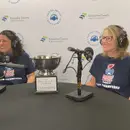


What if we told you that there was a nationwide contest for literacy and of the nearly 10,000 schools, Scenic Heights Elementary won FIRST place? And what if we told you that those students are English speakers of other languages? April Mansfield and Michelle Skidmore are ESOL teachers at Scenic Heights Elementary School. In this episode, hear how they unknowingly made it to the playoffs of the Imagine Learning Literacy Bowl and the impact that winning has had on their students.
Guests: April Mansfield & Michelle Skidmore https://scenicheightses.escambiaschools.org/ | https://www.facebook.com/imaginelearning
The 2026 InWeekly Best of the Coast winners were announced & this podcast won first place for Best Podcast! Thank you everyone for voting! This show is an initiative of the ECPS Office of Communications with the support of our strategic partner idgroup host & producer Meredith Hackwith Edwards of Outsider Advantage. Let us know what you want to hear more of! Contact the Office of Communications or visit voicesunitedineducation.com.
Learn more about Escambia County School District: https://www.escambiaschools.org/
Find additional links: https://www.voicesunitedineducation.com/podcast-episodes
Host: Meredith Hackwith Edwards
We were working with to set it up, but she set up a whole celebration day for them. So it was fantastic. We invited only two grade levels that we could fit everybody in the cafeteria. And so all of our East Hall students got to enter into the cafeteria to We Are the Champions. And so, I mean, it was you could hear as we were at your line, full cafeteria, parents in the back with all their flowers and you know, cheering, and the kids all made signs to whole forum, and those kids just walked in, just I mean, you know, big old smiles and chess held hide.
SPEAKER_02Welcome to the Voices United in Education podcast. Each week we showcase the teachers, administrators, and community members who go the extra mile to contribute to the success of every child in Escambia County. You'll meet the real people behind the titles and learn about the amazing resources to support your child's success. What if I told you that there was a nationwide contest for literacy? And what if I told you that out of the 9,437 schools and all of the students in them, our very own Scenic Heights Elementary won first place? And what if I also told you that those students are English speakers of other languages? My next guests are the ESOL teachers and proud trophy holders for their students at Scenic Heights. Today they're going to share how they unknowingly made it to the playoffs of the Imagine Learning Literacy Bowl and the impact that winning has had on their students. Leading strong scholars, champions of comprehension, April Mansfield and Michelle Skidmore. Welcome, ladies. Thank you. Thank you for having us. The two of you strike me as women who like to win. So how did you not know that you were in a contest?
SPEAKER_00I think we just weren't aware that the program did that. And we just were doing our day-to-day work and working with our kids. And this program is something we use every day. And we kind of have competitions within ourselves and within my classroom of making sure you get your minutes in and prizes for extra minutes and homework and things like that. But to think that we were part of something bigger, just really, I don't know.
SPEAKER_01It wasn't even on our radar. And we've been using the program for many years in the ESOL department. So it was strange that we hadn't even heard that this was a competition that they had on a yearly basis. And I talked to one of their reps yesterday that we did the training with, and he said that it is rare. It's basically you do not find out until you're in that bracket. And so a lot of schools, I think, are unaware of this competition that's actually occurring. Hey, and can I add something? Yeah.
SPEAKER_00We had two schools make it to the playoffs. Really? Inslee Elementary made it to the first round. It was top top ten. Yeah. So Inslee was on there too.
SPEAKER_01Yeah.
SPEAKER_02That is so interesting. And that you were talking to them and they were like, oh yeah, this is, you know, super unusual. And we had two schools in Pensacola. Right. I did that. So how does the contest work?
SPEAKER_00So we got an email in January that said you made it to the playoffs, and they do it, they play off the Super Bowl. So you make it to the next round, and then you have two weeks and they look at your information then. And now we know we're in it, right? So now, okay, maybe we're a little more competitive because we really know that we're in it. And maybe we encourage the kids to do it a little bit more. At school, we were still just doing it our normal time, and uh, but a lot of kids were working at home. I had students who were working for hours at home to do this. But it's not just about their minutes, it's also about their mastery because that's the point, right? The point's not to see how much time you could spend on a Chromebook. The point is to learn. So that's how it started. And then we found out we would wait for that email to come. It would come on Saturday afternoons there for a bit. And we would text, the teachers would text one another and we're like, we made it to the next round. And we just we really were a bit shocked ourselves. Not that we're not proud of our students and not that we don't think they work hard all the time because we do, but we're like seeing these same numbers that you just said, and we're like, oh my goodness. And we made it to the next round. And and so they would announce it just like the the the football team does. You know, they would say the next round, and then now there's this many teams left, and now there's this many teams left. Oh, that's exciting.
SPEAKER_02So, I mean, I think we all know why literacy matters.
SPEAKER_01Literacy matters. But why does a contest for it matter? Oh, that's I mean, it's so much more fun, isn't it? It's wonderful to get the kids engaged in in a competition. You know, they're they're out there every day, they're going through these programs, they're enjoying them, but then to add on just that sense of like, okay, I'm in this. This is this is now becoming more than just like the daily task that I have to do in my 20 minutes and imagine learning.
SPEAKER_00And I think it's a big confidence boost.
SPEAKER_01It is. And so they're they're watching themselves, they're getting more engaged in what they're doing. They're like, this is we're this is something fun. We're gonna do this. And then it brings that team aspect into it. And you know, that's the school team, yeah. Oh, yeah. And so you've got the little the school teams, and then they find out that they're working with the other grade levels. And so it just it brought everybody together. And I think that's why the competition is necessary because it just it it just brought just a whole different dynamic to the whole process that they're learning.
SPEAKER_00And then there's brothers and sisters in different grade levels, right? And so some of them are sharing devices at home, so they don't all have their own. You can't do this on a phone, it has to be on a tablet or a computer of some sort. So some of them were I had to kick my brother off so that I could get on.
SPEAKER_01Uh-huh.
SPEAKER_00And so it brought the families into it too. And we were certainly sending messages out to our parents to let them know hey, if you're ever gonna let them hang out on a computer, this would be the time. Right. Let them hang on there a little bit longer right now. I love it.
SPEAKER_02See, this is where I can sense y'all's competitive juju juju coming through. Like the juices are flowing.
SPEAKER_01Well, we we we like a little sibling rivalry. So you know it really was a good time.
SPEAKER_00And our classroom teachers, we're we're the ESOL teachers. So those students come to us just for part of their day. And they're in a traditional classroom the rest of the day, and they have homeroom teachers, and and those teachers were my fourth grade teachers are fantastic and we work together really well. And I was like, if there's an extra minute in your day, I'm not saying to do it instead of what they need to do, but if they have an extra minute in the day, it'd be great if they could hop back on Imagine Learning and say, Yeah, we'll do it, we'll do it. So we kind of all got into it as a school once as we were getting closer and we're like, we're still in it. Oh, we're still in it.
SPEAKER_02So this is what sounds way more exciting than the Book It program in the 90s that I did. You remember? Oh, yeah. I loved that program because I was like, you know, you did get a free pizza, but it was like there was a contest element to it, I think, as well. But this is sounds like that on steroids. I want to hear about your students though. So, Michelle, I'll start with you. Tell me about the ESOL students. What are they like? Obviously, they were super excited, but kind of paint a picture for me of who who's in your classroom right now.
SPEAKER_00So, so ESHOL students are a big mix. I'm fourth grade and I can have a fourth grade student who has just gotten to the country that does not know any English at all. Or I can have a fourth grade student who's been here for a few years and they get to come to me because we're just helping give them that support so that they can get up to the same level as the traditional students. So it's just a very big variety. And you've got those kids that come in who are eager to learn to speak English and their personality matters because you have somebody else who maybe is is a little bit shy and they're afraid to make mistakes and don't want to say things out loud. So the Esau classroom is just a a safer place to make those mistakes where they can just learn the language, we kind of learn it together. And I, you know, sometimes people think that to be an Esau teacher you speak the other language. I do not. I do not speak another language. So and you're not just going to have uh Hispanic students or Spanish speaking students or Arabic students or it could be any language. So it's a very big variety. My first year doing this a few years ago, I had a student who had no English and she hadn't been to school. Some of our students have not been to school in their country either, and they don't read or write in their home language either. So they'll come in and I had an Arabic assistant, and so we didn't speak Spanish. And she had never been in a classroom, she did not know her letters, and she learned so much, and it's just amazing how much you can bond with them not being able to speak their language.
SPEAKER_02Yeah, what is that like? How do you build rapport with students who speak a language different than you?
SPEAKER_01It's a lot of just, you know, we all we all have nonverbal body language that is very common with one another. We all laugh in the same language, we can joke around with them, and you almost have to be a little bit more of a clown, I think, when you're an ESOL teacher, just because you want to be able to bring out dramatic little dramatic, you know, you need to be able to tell a story not just with your words. And that's the one of our superpowers. And so we were just talking about the fact you had like uh an Arabic TA and nobody spoke Spanish. Well, we've had students that have come from, you know, rural communities in Guatemala that don't even speak Spanish. And so then they come in and even our Spanish TAs cannot communicate with them. And these kids are learning Spanish and English so that they can navigate their home community and then also their school and academic community. So wow. It's it's yeah, it's so tell me about your students, April. I have kindergarten and second grade. Well, a pod of second graders right now. We have another teacher that I'm working with in second grade. I have in kindergarten about 13 students that came in knowing no English toquito. That's the only Spanish I know. I'm proud of you. That's been you. Good job. Uh English. But they're they're coming in on a level where they might have been in a pre-K. And if they are, that puts them in an advantage, obviously, the most. But then we have students that are coming in not at the beginning of the year, but I just received three new students at mid-year as well in their kindergarten year, which is a foundational place for them to begin. And honestly, sometimes it is easier for those to get caught up when they do start at a foundational level rather than say in, you know, Michelle's fourth grade class, where it's coming in and not knowing your ABCs, not knowing your foundational English, and then having to start over at that level too. So my kinders are able to actually like move up with their peers, even in the gen ed population, learning at the same time. So it's exponential, you know, gains for them to watch their proficiency. Whereas if you compared them, say, with a fourth grade student that came in from rural Guatemala, we've got a lot of catching up to do. Exactly. So every every grade level is different, and each student is so different within their unique needs and their personalities that come in. So yeah. But in it's it's right now too with second grade. I have, I think it's about six students in my little pot of second graders, and I have Arabic students and Spanish speaking students. And so one of the favorite things I love to watch are the student interactions, especially when they don't know each other's languages. And asking about how we communicate as educators, watching them communicate as they navigate and learn to work with each other is which is a good point because they interpret for me sometimes.
SPEAKER_00I have a Spanish-speaking TA this year, but when I didn't, especially the kids, they'll they'll really help you and they help their parents. Oh my goodness, they sure they sure do.
SPEAKER_02Oh, they do, yes. So that actually brings up a question that I had. Is it harder to manage a classroom where the kids are potentially distracting each other by speaking home languages?
SPEAKER_01No. I don't think it's any more distracting than any other classroom that you have. I mean, honestly, I actually encourage the use of their home language in in the classroom because I feel like that is also cognitively like helping them connect those bridges and language acquisition. So oh, that's interesting.
SPEAKER_02Yeah. So tell me more about that. How do you teach like English to someone? I because for a very short time, I was a volunteer at Northwest Florida Learn to Read, and we did this day-long seminar on how to teach someone to read. You know, presume most of them were like already English speakers, but they just did not read. And in the process, we, you know, learned a lot about language acquisition and and phonics and just how the brain works. Does your position as an ESOL teacher like, do you have extra knowledge that the rest of us don't?
SPEAKER_01I don't know. You're the reading interventionist.
SPEAKER_00So well, we've had we've had some training in ESOL classes. We certainly have that that help, but it is it is amazing how many of those the things that we do help traditional students as well. Oh, absolutely. So it's not like a magic wand for ESOL students.
SPEAKER_01There's a s there's a science to there's a science to learning how to read. But then with language acquisition, we know that there is structurally, you're gonna go in and you're gonna learn social language first. You're always gonna develop your listening, then you're gonna develop your speaking, then you're gonna develop your ability to read it and then write it. And so one of the first things that we have to begin with is obviously that social structure and then also the ability to understand. And so it's a lot of repetition. If you do not like to repeat yourself, do not become an ESOL teacher because you're gonna be repeating yourself constantly just to help with that learning and applying the meaning, the semantics behind things, you're gonna have to make sure that that is being applied to even the most basic of things as a sight word, which would in a normal Gen Egg class would be just a sight word. But in ESOL, you have to apply a little bit of meaning behind it so that they can understand why it's important for them to even learn it in the first place. So is it science of reading or what's the reading approach, phonics? Oh, it's it's it's it's it's science of reading, but the phonics is involved. So we're using we use a lot of like foundational programs, even up past the foundational grades, which is usually your K through two. I mean, we're still working in phonics, still in fourth and fifth grade with with our students because it's so beneficial. Is it's the it's the foundation. They have to have that, especially when it comes to the reading aspect. Oh, it helps so much. You have to help so much. That's one of those myths that we were talking about too, though, is a lot of people think that students are going to be able to come in and if they're immersed in a language, that they're going to learn it. They should be able to learn it quicker. But because it we know it takes one to two years for social language acquisition to take place, it takes almost five to seven years for them to catch up to proficiency and academic vocabulary. So these standardized tests that they're being made to take alongside of their peers that have been raised speaking English, understanding English, interacting in English, reading in English, they're doing the same thing, but on a very large gap there for what they're being expected to navigate in that because you know, they may be here for about two years, which they're allowed a grace period of time when they come in in these testing scenarios. But after the two years, that grace period is gone. And so that's kind of it's hard to stomach considering that you know it's not going to be at least three to four to five years before they actually really understand what they're actually reading.
SPEAKER_02But they're still held accountable. Yes, exactly. I mean, this sounds like these kids are my heroes, basically. This is incredible. Yes, absolutely. Absolutely. It must be so satisfying as a teacher. Like this is satisfying upon satisfying from my point of view, because you are helping these kids jump leaps and bounds. They're so proud of themselves. They're resilient, they're resilient, and y'all won the biggest trophy ever. For those who can't see, this thing is sitting in front of me, and it is the size of a dinner plate on top of like a shoebox, basically. It's it's ginormous.
SPEAKER_00They were so proud. And then their parents, some of the kids got special awards because they just went above and beyond, even within our school. And we couldn't have everyone come. There's just wasn't a a space for that many people. So those parents were invited, and and there were parents there with a bouquet of flowers to present to their child and just their smiles. And yeah, we were we were just so and I tell my kids all the time, I can't do what you're doing. It's amazing what you're doing. I am in awe.
SPEAKER_01I'm in awe of them, just in awe. I had my I had a kindergartner teaching me about plural nouns. That's precious. It was. I was so that was absolutely they're they're they're just just amazing students and so hardworking and truly care about their learning.
SPEAKER_00But this program is good because it helps, you know, that idea of setting up every child for success. It begins with their home language giving the directions. Now, the work is not in their home language, but it helps and then it scaffolds that out. And so that that's something that that really helps them is they get to hear the directions in their home language.
SPEAKER_01So you can build upon the knowledge that's already there. And actually the program itself takes away the scaffolding as necessary over time. And that's the beautiful thing is that with everything else that's on our plate, we do a lot of monitoring, of course, of the data and the things that they're doing on the program, but we don't have to basically, we're not in charge of that. They can see how they're progressing and start taking little bits here and there that they're gonna take away to challenge them a little bit more and push them further. So it's a wonderful program to use with E-Sall students.
SPEAKER_02It sounds very supportive too for you as a teacher to not have to like do, you know, all the heavy lifting.
SPEAKER_00And that is just one part of our day. So we certainly don't spend our whole no hour and 30-minute block on Chromebooks. So make that clear. Yeah, not an extra.
SPEAKER_01Not at all. Not even during the competition, which is no wonderful. We we were just pretty much we were doing our standard 15, 20 minute sessions a day that's we did extra on Fridays for two weeks. We did and we had little fun parties that we made it fun. We brought in popcorn and they got to bring their stuffies to sit with them and blankets, and we had pizza parties. And the whole school was very supportive of us in that.
SPEAKER_00Yeah. That's so when they walk around with their shirts on, you know, they'll say something.
SPEAKER_02Okay, so the shirts came from the company?
SPEAKER_01Yes. Yes. So they they got shirts for all the East All students and the teachers, and then some of the administrators and some people in the district as well.
SPEAKER_00So our school has a morning news program each morning to make the principal and someone else, the counselor, the assistant principals. Two of them are always on there in the morning and kind of give the announcements for the day. And so they were really plugging us on there for several weeks.
SPEAKER_01Well, they did. It was really sweet. And so they brought down their rep, Lisa Wise, is the rep from Imagine Learning that we were working with to set it up, but she set up a whole celebration day for them. And so it was fantastic. We invited only two grade levels that we could fit everybody in the cafeteria, and so all of our ESOL students got to enter into the cafeteria to We Are the Champions. And so I mean, it was you could hear as we were lunch, full cafeteria, parents in the back with all their flowers and you know, cheering, and the kids all made signs to hold up for them, and those kids just walked in, just you know, big old smiles and chess held high, just yeah, so proud. Oh my gosh.
SPEAKER_00And then afterwards we walked over to the park that's near our school, and they had got to have an hour at the park, and the Kona ice truck came. They got Kona ice for them and everything. It was nice.
SPEAKER_02That is so special.
SPEAKER_01I mean, they will remember this forever.
SPEAKER_02I know. Forever. I certainly will.
SPEAKER_00I am. I've been teaching a long time, and this was one of the most rewarding things. I mean, I walked into that cafeteria and I just teared up. I got goosebumps. It was just amazing. It really was.
SPEAKER_02So, through this, do you feel like I feel like we might have an opportunity to dispel more myths about ESOL students? And I know each of you kind of have your own, you know, area of myth busting you'd like to do. So, Michelle, what do you feel like people misunderstand about ESOL students?
SPEAKER_00One big thing is that I think that people assume, and we touched on this already, that they know how to read and write in their home language. And most of mine do not. Even those that come when they're a little bit older, they don't know how to. And and that makes a difference because you can't just give them a Spanish dictionary or whatever language it is, for them to look at that dictionary and then to look in English because they don't know it in their home language. So that's big. And then the other big one is that math is a universal language, so math should be easy. Have you seen math these days? It is so much more than numbers. There are so many words on the page. What about you?
SPEAKER_01I you know, I'm gonna take the other side of that too, is that, and this is why we always say every single student is a very different Ballatrix, because a lot of people still think that because they speak another language that they are not academically strong. But there is a very large difference between language proficiency and intelligence.
SPEAKER_00Yes.
SPEAKER_01Yes. And so we have a lot of students that come in and are extremely brilliant, very intelligent students. They just don't have the language to actually like express that as much. And especially because, too, a lot of your new students that come in, there's another period, it's a silent period where they're not speaking. And so sometimes people get the impression that. They're not as, you know, with it as others. But that's not the case. They're just not confident enough to actually speak in the language yet. And that comes with time. And so they're actually processing way more than anybody can even imagine. And that brain is going three times as fast as you think it is. So yeah.
SPEAKER_00And they end up in our classroom for a lot of different reasons. Some are very positive reasons. And then some, just like any other student, just like a traditional student in your classroom, there's stuff going on that uh affects, you know, I they're they're missing their family or their friends or or whatever situation they left, you know, for whatever reason, some good, some bad. You know, so it's just a lot going on.
SPEAKER_01Yeah. Why does this work matter to you? Why, why Esau? Leading off what you just said, I think that's one of the things that I just I've had enough years now working with the Esau community and the families and the students. And I see what a lot of our families go through, you know, especially now they're just navigating very uncertain times. So I feel like the school day is a very positive environment for a lot of our students to come to, and it's consistent, and they're coming there and they're going to have that in their life when everything outside of that day for them may not be so consistent. And our kids behave.
SPEAKER_00It is so easy to manage. It's a smaller group for one thing, but they just as a whole, and I know we shouldn't talk in such broad generalities, but they are hardworking and their parents are appreciative of what we're doing. And they they just see the value that we take for granted, the the education that we take for granted that our kids are going to get. And and they just appreciate it so much.
SPEAKER_01Right. I mean, they're they're struggling with their own barriers. And so they want everything for their child. And they they will do everything and anything to make sure that their children are given that advantage and that step up that they did not have for themselves. And that is a lot. And so getting up every day and going to work with my kids, and by the way, they're just cute. I mean, there's nothing cuter than a little kindergartner that just came from Mexico. I'm sorry, they just come in there and there's like and they're so sweet. And to watch them just bloom. Yeah. You know, from the beginning of the year in August when they're so scared. And there's like a few weeks where they're just, they're scared. They don't know how to navigate school. I mean, kindergartners it's rough when you know English and can understand what your teacher is saying, but these babies, they're just there. But then to watch them get comfortable in that environment and start to learn and start to grow. And then they come back after Christmas and they're like speaking to me in English and just that just piecemeal. And they get more proud about it. That is so just remarkable. And I just want to provide a safe space for that.
SPEAKER_00Absolutely. Safe space for that.
SPEAKER_01Yeah.
SPEAKER_02Well, you ladies are doing a fantastic job. And even without the trophy, you know, what the work that you're doing is making such a good impact. And I'm so happy that you also have this gigantic trophy to brag about. And I'm excited for whatever's next. So thank you for sharing. Thank you. Thank you. Thanks for listening. Be sure to subscribe and share. Voices United in Education is a production of Escambia County Public Schools.


