Ep 208 | The Amazing Shake: a competition of social skills
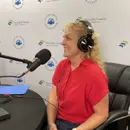
The COVID19 pandemic created both academic disruption and social deficit. Terri Fina, Principal at Holm Elementary, is getting her students back on track through the Amazing Shake—a social skills competition created by Ron Clark Academy in Atlanta, Georgia. In this episode, she shares the impact its making and how her students fared at the state finals. Guest: Terri Fina https://www.theamazingshake.com/ The Florida Department of Education just released district and sc...


The COVID19 pandemic created both academic disruption and social deficit. Terri Fina, Principal at Holm Elementary, is getting her students back on track through the Amazing Shake—a social skills competition created by Ron Clark Academy in Atlanta, Georgia. In this episode, she shares the impact its making and how her students fared at the state finals.
Guest: Terri Fina https://www.theamazingshake.com/
The Florida Department of Education just released district and school grades and we're are beyond thrilled to announce that Escambia County Public Schools has achieved a district grade of ‘A.’ This means that 83% of ECPS schools upheld or exceeded past years’ performances!
Learn more about Escambia County School District: https://www.escambiaschools.org/
Find additional links: https://www.voicesunitedineducation.com/podcast-episodes
Host: Meredith Hackwith Edwards
SPEAKER_00
The teachers are prepping kids all year long in fifth grade. The skills help them build empathy. It helps them take ownership in themselves, in what they're doing in school, and what they're achieving. And they're constantly talking about things like when you get to middle school, when you get to high school, when you get a job. These are skills that are going to help you be successful and have more options in life than if you don't have these skills. So that's one aspect of helping them get ahead.
SPEAKER_01
Each week we showcase the teachers, administrators, and community members who go the extra mile to contribute to the success of every child in Escambia County. You'll meet the real people behind the titles and learn about the amazing resources to support your child's success. Today's fifth graders were the five-year-olds of the pandemic. And while we can all draw the conclusion that this created an academic disruption, what may be less top of mind but obvious to those who work with them is that this also created a social deficit. My next guest is the principal at Home Elementary who is getting her students back on track through the Amazing Shake, a social skills competition originating from a school in Georgia. Today she's going to share the impact it's making and how her students fared at the state finals. Crowdsourcing wisdom, building youth, community, and confidence, Terry Fina. Thanks for being here. Good morning. So if the Amazing Shake event isn't about just learning a solid handshake, what is it about?
SPEAKER_00
The Amazing Shake is an amazing event that is all about teaching kids skills that you don't learn directly in the classroom, soft skills, like introducing yourself, like how to introduce someone else, how to be a voice appropriately, how to interact with those you don't know appropriately. A lot of those kinds of skills that we don't teach directly in the school. It's assumed they will know. Shaking hands is just one of those, which this started a couple years ago when at the end of the year we would shake their hands when they would get their awards and they don't know how to shake hands. So I told my fifth grade teachers we have to practice that with them. So then they were aware of this event, and from that has now grown all of this. Wow. So but wouldn't wouldn't those skills be learned at home? Sometimes they are, sometimes they're not. But it's even more what we're finding with our students, especially those that have been through that pandemic, the social skill aspect of it. This group of fifth graders we have this year has honestly been one of my more difficult groups overall of students. Very smart group, but difficult. They're social skills. They struggle to get along, they struggle to verbalize appropriately what they need, what they want. So it is things that are taught at home, but when you go out into public, it's a different story. And that's not what they're learning at home. So being able to work with a classmate, even if you say you don't like them, that's part of life. But in fifth grade, that's not something that they have already learned how to do well. So this program teaches them a lot of those skills, a lot of employability skills. That's why we have the event that we do that with we have actual individuals from the community come in because they know what they're looking for in employees. So all those skills and more are what they learn through this whole process.
SPEAKER_01
Isn't there the socioeconomic element too that kind of affects what skills are top of mind as far as tiered priorities?
SPEAKER_00
We have a lot of at home elementary, we have a lot of families that are working two, three jobs. Many times students are not going home with an adult there, multiple siblings that the oldest is taking care of, things like that. So it becomes a struggle to fit in anything else other than just making sure you are putting food on the table and have a roof over your head.
SPEAKER_01
So if a child is experiencing those challenges and maybe even experiencing some homelessness, what advantage is the skills learned at the Amazing Shake going to give them? Because you kind of think like it's kind of dual thinking, right? Because on the one hand, you're like, hey, these are important skills, but but you know, I get it, you're you're, you know, busy and and working lots of jobs and trying to make ends meet. But on the other hand, it's like, well, wait a minute, if I was hungry, would I care about doing this? So what advan like if I was suddenly in the shoes of that child, I would be asking, yeah, I want to please my teacher and and do good, but like, how is this really going to push me ahead? How is this going to give me the edge for survival?
SPEAKER_00
Right. How would you answer that? Well, and the teachers are prepping kids all year long in fifth grade. The skills help them build empathy, it helps them take ownership in themselves, in what they're doing in school, in what they're achieving. And they're constantly talking about things like when you get to middle school, when you get to high school, when you get a job. These are skills that are going to help you be successful and have more options in life than if you don't have these skills. So that's one aspect of helping them get ahead. My teachers start at the very beginning of the year. Simple example. We tell our teachers to greet the students when they come in the door. Well, fifth grade teachers greet them with a handshake. I have one male teacher at in fifth grade, and he every day, even now, this morning when I walked around, he's greeting them with a handshake to practice that skill. I never, when I grew up, didn't walk around and meet anybody that shook my hand, but every day they're getting a handshake, so they just practice that skill nonstop. Other skills that they're practicing, like they had one day that they had an etiquette day for fifth grade. They had set up the cafeteria, all of our fifth graders were allowed to invite someone from campus. And so all of their guests and them, they ate together at big long tables, and the fifth graders had to practice the skills that the teachers had been talking to them about and working with them on. And they had one of our local restaurants had donated all of the materials, the foods for that. It was amazing because, as I said, this group has been difficult since second grade, and to walk in there and see those kids being polite, talking about which fork to use, just things I didn't have that growing up. You know, we didn't have two forks at the table. But it was really amazing to see the difference in what I knew they were at as second graders. And now looking at them, they were just so grown. It was like, oh my goodness. This is so interesting.
SPEAKER_01
Okay, so what I'm I'm hearing two things. Well, thing one is it's not about the forks. No, it's about taking a break from the survival mindset. Yes. Because if you can think about, oh, and where will you go to high school? Where will you go to college, or where will you get a job, or you know, what's next when you talk about what's next for a young person who is used to just talking about, well, what do I eat next? Right, that can be a signal that, hey, there's hope. Oh, yes, we can definitely we can carve out this future, we'll make it together. And then thing too that I'm hearing is that there's a a benefit for the educator. So for behaviors and for um classroom culture, classroom.
SPEAKER_00
Yes, it builds a lot of family. This is this whole amazing shake is part of a program through Ron Clark Academy, which we have houses and there's a whole bunch of information about that. But Houses like Harry Potter. Like Harry Potter.
SPEAKER_01
I want people to know that because I did this deep dive on Ron Clark, and I was like, what in the Harry Potter am I looking at?
SPEAKER_00
Yes, and it's Houses like Harry Potter. We have four houses. And part of that whole program is each teacher does a great job of building a community within their classroom, but our kids don't function in just one space. So the Ron Clark program has helped us expand it to we are four houses, but we're one family. So now every student across grade levels is in a house and they interact with each other, and then the houses interact with each other so that we're building not just a micro community within the classroom, but a bigger community, and then we talk about expanding that to an even bigger community, which is the neighborhood and the city. And some of that pulls in then when they do actually have the amazing shake event that we have at the school, because that is the only way we're able to do that is with all of the community members that volunteer to come and assist us with the events for the fifth grade students that we did in December.
SPEAKER_01
Okay, so lots of community happening. Oh, yes, yes, lots of help. When we think about fifth grade, that's where we we do see a little split in their little social circles. Yes. Fifth grade is where, you know, okay, we're not babies anymore, but it starts to get a little clicky. Um, we see that problem a lot with young, young boys because they they start to, I don't know, something happens and and it can contribute to what experts are calling the loneliness epidemic. Do you see this event, this program? I mean, that's a big lift.
SPEAKER_00
Do you think it's helping? I do, and I don't know if you want me to jump to the event because this shows an example of that. But we see a lot too with Clicky with the girls as well. And now through this event, so at the amazing shake that we had on our campus, we had multiple organizations and community members who came in and did different events with students, such as introduce yourself and explain to me why you would be a good employee at my job. Or one of them was you can make your own tennis shoe design online, and they had to then sell that design to the committee that was there and various things like that. For that event on our campus, every fifth grader goes through it, every fifth grader. And it's really just it's an event that is uh difficult to describe because you see kids that will hardly ever talk to anyone talking at that event. They're explaining themselves, they're trying to sell themselves, and you see every other fifth grader being very supportive, saying, Good job, wow, you did a great job there. It's almost as if it's an opportunity for them to come outside of the roles they normally play and now be this team.
SPEAKER_01
Interesting. Okay, it's just very cool. No, I click with that. That makes sense to me. Okay, so let's walk through the events. So this might be a good point for you to talk about how the teachers prepare the students. So start with how the students enroll for Amazing Shake.
SPEAKER_00
What we do with our school is all of our fifth graders participate in the Amazing Shake. And the teachers, as I said before, they're doing little things all first semester to prepare them for it, like shaking hands, like talking about etiquette, having etiquette day. We also have fifth grade helpers that go and help with our lower grades, pre-K, kindergarten, and some of our self-contain units, just in assisting and being an appropriate assistant, doing things like that. We do have them coming a short period of the time during the day and coming and helping in the front office. A variety of things are doing like that all that first semester. Then the day of the amazing shake, we have multiple community members who come in and they have an area where they are designated to do whatever activity that is, like interview for a job, et cetera, et cetera. And all of our fifth grade students go through that event that day. They are judged by each of those community member activities. And who judges them? Those individuals who are at the booth or at the table. The community members. And they're given a little training at the start of how exactly to do that. They give their information, it's all turned in, and that whole class is then broken down to the 20 top individuals. They know that by the end of the day because those scores are turned in. Then those top 20 the next day do an event at Verizon and assist there, and it's broken down to 10 by again the same kind of rubric that is scoring them. And then those 10 are broken down to five, and then of those five, it goes down to two. The rule of thumb is that you send one. We've done this two years and we never send one. Now, why is that? Last year, Mr. Leonard was kind enough to come and do our event for our final two. We have a restaurant in town that comped all the meals for all three of them. He went to eat with them and then have basically a little conversation. And he was supposed to determine the winner between the two. We had donations for one student to go, and we had a grant for some teachers to go. Mr. Leonard couldn't decide. He said, This is too hard. They're both so good. So he found funding for the second student to go. That was last year. She found funding or he paid personally out of his own pocket. Yeah. Then this year, Mr. Denny Wilson came and he was doing this, and he's like, Oh, Mr. Leonard, he just whatever. I'm gonna be able to do this. I can decide. He came and visited us the day we did the amazing shake and was telling me multiple times how he isn't gonna have that problem. Yeah, that's not a good one. Go pick one. So the next day I get these email, and Denny said, Wow, this is really hard. I can't pick. So he did name one, but he worked with us to get the funding to pay for the second young lady to go. So again, this year we sent two as we did last year. Because once they get to that level and you sit and talk when you can even now sit and talk to these two young ladies, and they just did an amazing job of describing themselves, talking about their future, talking about what they want, their goals, what they want to achieve. Just very amazing, articulate young ladies.
SPEAKER_01
Oh my gosh. Okay, so much to impact there. So, with all of this stuff, how does it does it eat into time for their academic content? How are we finding time for all this?
SPEAKER_00
The teachers are really great, and the teachers obviously have bought into this to the maximum. They do this when they're walking in line. As I said, when they're at the door and they greet them. They've even given up their planning time when students go to special area to meet and talk with them about different things, or like when we first started our fifth grade helpers, they gave up their planning period to have them come to the front and they showed them everything they needed to do. So they really are trying to do those things outside of our academic time: recess, lunch, all those times. So they don't give up academic time, but it's enough time to make the impact on the kids. Okay.
SPEAKER_01
And the students who aren't winning, I this is kind of a one of those dual things again, right? Because I'm thinking, okay, we're building their confidence. Yes. But then they don't win.
SPEAKER_00
Is that a double-edged sword? Well, I think it's more for us as adults than for them. Because if you watched the video that I had sent you about the day of the amazing shake, when they are up there and they're calling the final individuals, it is all about you did an amazing job, good job, congratulations, hugs. Even last year, I've not seen anyone ever be unhappy, ugly about not winning at all. They were just very supportive and very happy for the individuals who did win. I love that. It is, it's it's awesome to see.
SPEAKER_01
Okay, I want to go back to the Ron Clark Academy thing because this I feel is connected to kind of the personal development that you're creating within the students. Because when I, like I said, deep dove into this, I was like, wait a minute. Terry reached out to another school. That's interesting because you would think there'd be some resistance to asking for help, because in the professional landscape, at times, that can signal failure, struggling, that sort of thing. And so I thought, I wonder if that has influenced the culture of your school to be able to say, Hey, we collaborate.
SPEAKER_00
Well, the Ron Clark Academy is a whole program that you do a multitude of things. I have some amazing teachers, and one of my teachers brought this to me a few years ago, and I was like, I don't think we're ready for that yet. But then the very next year, she came again and said, Let's try this. Our PBIS, the kids aren't interested in, it's not working well. I said, Okay, we will try it. And several of our faculty have gone to the training there, and we've, you know, just so we have embraced it, and it has made a huge difference in the culture, not even just with the students, but with the teachers. One of the things with the whole program, because there are four houses, so all students and staff, second through fifth, get to use the sorting hat. Yes, we have a sorting hat, and they get to select their house. And then our pre-K through first, they are in the same house with their teachers. And then we have events throughout the year. And you can earn points for making your AR goal, for doing well on a test, for being friendly with your peer, sitting with the kid that's sitting alone, being kind to someone. You can get house points for all sorts of different things, and we've given teachers some training and in service on that. The teachers are interesting too because you would be surprised how many, but I don't want that house. That's not my favorite color. Guess what? That's your house. That's what you sorted to. The kids, they're so funny because they so buy into it. When I walk down the hall, I happen to be in the Amistad house, and our color is red, and they're all like giving me a hard time. You're not winning. Our house is higher than you. Or you know what? Like, we all have we had field day and we did some events, and they're like, is a Bendy house beat Amistad House? It's so cute to see and cool to see that they buy into that and love that. They're very competitive, but in a good way.
SPEAKER_01
Yeah, and that seems to have an and have had an impact on the academic standing, right? Because home was not doing so good as a school for what, like six years?
SPEAKER_00
Six years prior to my being there, they were a D, failing school. The first year I got there, we pulled it up to a C and had been a C until two years ago, which we made an A, and then last year a B. Only by one point we would have been an A. Oh wow. But I do think it impacts it. I think it all pulls into being you're a part of this. The kids take ownership, they believe in it, and they have fun because it is fun.
SPEAKER_01
Yeah. It sounds fun. I mean I I am so intrigued by it completely.
SPEAKER_00
And I do have a little bit of that stirring the pot because I like to go or I walk around every morning and to say good morning to every class, and I always have to throw in their Amistad rules because that's my house. And of course, you know the feedback I get from that. I could totally just see how this would help attendance too. It does. We tried last year when we had the early release days. That's when we would have house day because that tended to be our poorest attendance, and it did help. This year they did away with those, so we tried moving it around to different days that we had low attendance like Fridays. So it has helped a little bit, but they kind of we changed that up in the middle of the year, so we didn't really see the kind of impact I'd like to see. But even events like when we have family night, your house is gonna get points if you come with your parents. Ooh. So yeah. So we just we use it as much as we can for everything we can.
SPEAKER_01
Okay, this is so fantastic. So take me to the Atlanta competition, end of March 2026. Who won?
SPEAKER_00
What happened? It was March 28th, 29th, and our two young ladies went. And this tells you how much my teachers have bought into it. We did not get a grant for a staff to go this year, but two of my teachers who believe in this program so much, they asked me if they could take the day that Friday they paid their own money to go and stay and be with the girls. It was just awesome. So that day our girls were doing the thing, going around, and unfortunately, neither of our young ladies won. But one of our young ladies got extremely ill. Oh no. She had to be taken to the hospital by an ambulance. Oh my gosh. Yes. And she's fine now and she's back and she's all well. It was a a minor issue, but it did cause her some vomiting, et cetera. And so she was very ill at the moment. But the piece of that that we brought back for our kids on Sunday, when that young lady's in the hospital with her mom, another student who goes to the Ron Clark Academy, but didn't know her, hadn't been in any of the activities with her, came up to my teachers who were there and said, How is she doing? I saw that she fell out. And if you would give me your contact information, I'd like to send her a get well package. So, of course, my teachers, being who they are, when they came back, they shared that with every single one of their students and said, This is what we want home elementary to be like. We want you all to ask about other people. We want you all to care about other people, and not just because we say so, but because it's the right thing to do. Wow, that got me. Well, it got me when um Mr. Bomani was telling me about it. I was like, what? So that that is our goal that we have a school full of students and kids that believe in themselves and will do the right thing no matter who's watching them.
SPEAKER_01
Those are qualities that last. Yes. That's more than the handshake. Oh, yes, that is our goal. This was the second year for this event. Yes. What do you hope for it in the future?
SPEAKER_00
We would love to just continue it. One of the issues we have is, of course, funding because it's not in our line budget. We we have to ask donations from community members. Since I have been at Home Elementary, I have never had any organization in town that we have asked to turn us down with any requests. They've just been fabulous. Not just with donations, but with money, with their time coming to the event. Mr. Simmons has been there both last year and this year and participated. And we would just like to see more who would be interested in coming and actually doing something at the event as well as donating the money. Because again, even with the students going, we have to bring build donations for them to be able to attend with their parent going with the hotel and all of that because it is a two-night event. But just continuing to build it and continuing to refine and improve our whole house system so that students really enjoy being at home elementary.
SPEAKER_01
Thank you, Terry. I am so impressed by how you're going above and beyond and thinking outside the box and connecting those dots to make this so memorable for students. Fifth grade, that's when core memories are built, and you are building some great ones.
SPEAKER_00
Well, they aren't going to remember what they got on their reading score, but they will remember being in their house.
SPEAKER_01
Thanks for listening. Be sure to subscribe and share. Voices United in Education is a production of Escambia County Public Schools.


