Ep 196 | More than babysitting: earning & learning
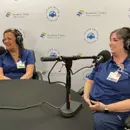
Send us Fan Mail What exactly is a certified babysitter? How do both girls and boy become certified babysitters? Jennifer Smith Richardson is the Patient Education Specialist and Janna Jones is the Health Screening Specialist for Ascension Sacred Heart Community Outreach, helping equip confidence in young babysitters and the parents who hire them. In this episode, they share the details of the Safe Sitter Program and the impact its making, facilitating personalized care and parental peace of ...


What exactly is a certified babysitter? How do both girls and boy become certified babysitters? Jennifer Smith Richardson is the Patient Education Specialist and Janna Jones is the Health Screening Specialist for Ascension Sacred Heart Community Outreach, helping equip confidence in young babysitters and the parents who hire them. In this episode, they share the details of the Safe Sitter Program and the impact its making, facilitating personalized care and parental peace of mind.
Guests: Jennifer Smith Richardson & Janna Jones. For class dates & registration, call 850-416-7262 https://safesitter.org/
Vote for Voices United in Education as "Best Podcast" 2026 in InWeekly's Best on the Coast! https://form.jotform.com/261185754425158
This helps connect local families with the resources they need & the stories that get missed.
Learn more about Escambia County School District: https://www.escambiaschools.org/
Find additional links: https://www.voicesunitedineducation.com/podcast-episodes
Host: Meredith Hackwith Edwards
The childcare part is talking about understanding the different ages and stages that a child goes through, understanding uh how an infant is different from a three-year-old, understanding all the basic things that they need to know.
SPEAKER_01Welcome to the Voices United in Education podcast. Each week we showcase the teachers, administrators, and community members who go the extra mile to contribute to the success of every child in Escambia County. You'll meet the real people behind the titles and learn about the amazing resources to support your child's success. Anyone who's ever paid for a babysitter knows full well that child care isn't cheap. But what if the very same drain on your bank account could be a resource for your child, one that teaches them responsibility, business skills, and earns them money? My next guests are helping kids do just that. They're the teachers for Ascension Sacred Hearts SafeSitter class, helping equip confidence in young babysitters and the parents who hire them. Today, they're going to share the details of the program and the impact it's making, facilitating personalized care and parental peace of mind. Jana Jones and Jennifer Smith Richardson. Welcome, ladies, to the show. Thank you. Aside from being teachers of many, many classes, so many classes, Jennifer, you're the patient education specialist for Ascension Sacred Heart Community Outreach. And Jana, you're the health screening specialist for Ascension Sacred Heart Community Outreach, correct?
SPEAKER_00Correct.
SPEAKER_01Excellent. And this is just one resource under the umbrella of the community outreach program, right? Yes. So tell me more about what is under that umbrella.
SPEAKER_02We have a food pantry. We also help people who can't afford medications. We also do diabetes education. We also have the Rotten White program, which is also umbrella there.
SPEAKER_01That's a lot. Wow. So the Safe Sitters program is also under that umbrella. Yes, absolutely. Okay. It's such a great resource. And Jennifer, you shared that one parent said it saved a life. Yes.
SPEAKER_02We had a student who actually took this class. She was responsible for a child who was old enough to sit in a stroller. There were ponds close by. She was allowed to take the child in the stroller to the ponds. She got to the pond and she put the brakes on the stroller. And because it was a steep hill, the stroller got overbalanced. The child went in the water headfirst. And she pulled the child out and was able to stay calm enough to tell people that were around her to call 911 while she did CPR and save the child's life. Yes.
SPEAKER_01Wow. That's incredible. Yes. I mean, that's the whole, that's the whole thing, right? Yes. That's amazing. And this class is once a month, January through October. So it sounds like a well-oiled machine, Janet. Where does the curriculum come from?
SPEAKER_00It comes from the Safe Sitter program that we both Jennifer and myself had to be certified through their program. So we get all the material from them, and then that allows us to be able to teach the courses that they offer in this program, which is a national program. Not anybody can just do it. You have to be certified with them in order to be an instructor with that program.
SPEAKER_01And I read that the curriculum is split up into four categories of instruction: safety, childcare, first aid, and business. I love how thorough that is. That's so good. And I think I saw you brought a book that the children who take the class, they get to keep this book as like a reference.
SPEAKER_02Yes, they can keep it as a reference. We also teach CPR, which comes with a book that they get to keep as a reference.
SPEAKER_01Oh, I love that. Okay, so let's start with safety because you talked about CPR. We obviously were saving lives. What kinds of safety skills are they learning?
SPEAKER_02The safety skills in the in this book are is talking about keeping themselves safe. So whether they're at home or with somebody else, how to like keep the doors locked, how to walk up to a dog that they're not familiar with, just and then not have thought of that.
SPEAKER_01Yes. That's so smart.
SPEAKER_02Yeah. It's absolutely this program is a very thorough program. It covers literally everything.
SPEAKER_01You mentioned CPR. Let's talk about that because it's different than being CPR certified, right? Yes.
SPEAKER_02We give CPR, which is called family and friends CPR. It is good for two years. I do know that in the state of Florida, you have to be able to take a test to be certified through the state, and you can't do that until you're 16.
SPEAKER_01Okay, so that's why it's different. So it's uh what's the distinction? It's a card, but not a certificate.
SPEAKER_00Yes. They get a card. It's a we laminated for them so that it says they have taken CPR. They just are not certified because they're not of the age. The only difference with the certification is the certification is a test. That's what they can't do because of the age. They learn exactly what anybody else would in a CPR class. And Jennifer's really good at that. Okay.
SPEAKER_01So when they're taking this class, I remember taking one when I was working in the nursery at the church, but I was over 16. So I think we did actually get certified. But we had specialized CPR dummies that were the kids, like the little baby dolls, and we learned how to do the CPR and you don't apply as much pressure and two fingers and all that. Tell me what that looks like for this class.
SPEAKER_02It's the exact same. It's the exact same thing. Yes. We have our own mannequins that we use. They watch videos that come from Safe Sitter. And then I go back and reinforce what they have learned from this from the videos. And then it just kind of rolls from there.
SPEAKER_00We have adult mannequins and babies. Yes. We have both. We will make sure that they everybody touches the adult mannequin and the baby mannequin that everybody is familiar and has a comfort level with it.
SPEAKER_01So it's different when you're watching it versus when you're applying those compressions. And is it still just compressions and no mouth to mouth? Yes. You don't have to do mouth to mouth.
SPEAKER_02That's totally up to you. And I teach that. I tell them that you're not required to do mouth to mouth.
SPEAKER_01So for the child care skill part of it, is that like changing a diaper and knowing how to properly heat a bottle? Or tell me what's under that part of it.
SPEAKER_02The childcare part is understanding the different ages and stages that a child goes through, understanding how an infant is different from a three-year-old, understanding all the basic things that they need to know.
SPEAKER_01That's pretty good because when you go to college to learn child care to open up your own care center, the child development, that's what the I think the class is called, and you learn those milestones to look for.
SPEAKER_00And in the book, it it gives you different scenarios. Okay. So with this situation, who would this pertain to? An infant? Yeah. Toddlers, preschoolers, and school agents. Yeah. So they're asked that, and they have to, you know, we test them on that verbally to, you know, make sure they understand that.
SPEAKER_01So you test them on it verbally, they're watching a video, and we're there's like some interactive elements. Yes. So no matter how your child learns, they're going to absorb this info. That I feel like that would be the difference between taking this course and say doing some online thing.
SPEAKER_00Yes. Yes. It's, yeah. And we encourage them that it when they start babysitting, if they want to take these books with them to give them a refresher if a situation comes up, they've got the information right there in the book to help them if they need that.
SPEAKER_01What age group of kids are we talking about are taking the safe sitter class? 11 to 14. Wow. That's so cool. You know, it must be so weird for parents, right? When they 11 looks so little, you know, when you're not 12. 11 is your itty bitty. But so it's so reassuring, I imagine, right? For parents to know that they're getting that. Yeah.
SPEAKER_02And also we have done classes for 15 to 18 year olds too, because this program is so thorough. And we would like every person who wants to babysit to know this information.
SPEAKER_00And Jennifer is also wanting to do an older student class, but to cater it to that specific age group. It's different teaching an 11-year-old and an 18-year-old. You just present it a little bit different. And so we really want to, she really wants to work on that. So we can offer that to older kids because I I any anybody, any kid, whether it's a boy or girl, and we encourage the boys to come. And we have lots of boys that do attend this class. What's been the boy reaction? They love it. They because you have some parents and some family dynamics that have an older brother and younger sisters. Oh. And so you want the, you know, you want the older brother to be comfortable and you want them to start babysitting. So we encourage that. We've gotten a good response from boys that have been in our classes.
SPEAKER_01I didn't even think about the idea that, you know, I say I'm a parent and I have multiple children, and maybe there's an an age gap that allows an opportunity for babysitting, but I want, and if there's always a good benefit from having an outsider teacher a kid, right? The kid is going to absorb it more. It's, you know, they don't have parent deafness. So so then they would get all of the skills, all of the things, especially if let's say if I was a mom of three, for example, my eldest was old enough to watch the youngest two, I might not know what to teach because I've been doing it for three kids, you know. So I wouldn't think to to teach something that comes natural after having three of them.
SPEAKER_00Yep.
SPEAKER_02And that's some of the six behavioral management skills too, is provide comfort when and then take a break and start over. Like it's got several skills that it that you can, if you apply them as you're babysitting, you will apply them in life. And I can say, as a stepparent, that I have actually applied the same skills to my stepdaughter.
SPEAKER_01I didn't even know about the behavioral management skills. Management skills. It sounds a little bit like emotional management. It is. It is. Babysitting knowledge doesn't do a lot of good if you don't have any clients, which when I have talked with some parents about, you know, have you thought about letting your child babysit? It's a great income. And they're like, yeah, but who would I, who would I have their babysit? Can you give me some examples of the business lessons they learned, specifically the big question of finding clients?
SPEAKER_02Parents aren't gonna let their kids just babysit for anybody. And I tell them this. This this also tells you how to do it as an adult if you're babysitting outside of your parent circle. And I tell them all the time, your parent, your parents aren't gonna let you babysit for anybody they don't know and they don't trust. So it'll be their friends or their family, or if you go to church, it'll be your church family or whatever.
SPEAKER_01It'll be somebody that your parents are involved with. Yeah, coworkers. Yes. That's how I found my babysitting clients when I was a kid was people my mom worked with her clients, then, you know, I had a sweet little referral tunnel. You know, it was it was good. It was really good. What other kinds of business skills are the kids learning?
SPEAKER_00They're taught about uh to ask about, you know, the pay. What the routines are. Yeah. Yeah. When will you be home? You know, ask these questions, you know, when will you be home? Where are you gonna be? Where are things, specific things in the house that they might need to know where they are or not to go into whichever how long you're gonna be gone.
SPEAKER_02They also teach how to how to refuse a job. So if they come and they're like for something comes up in an emergency and they have to refuse the job, or if they have or if they have an emergency and they need to have them find somewhere else to to do the job. That's where the networking comes in with other babysitters.
SPEAKER_00We've had some girls that say they're going to form a babysitting club. And so, which I think is awesome. It's so because if you cannot babysit, then you have the choice to tell that parent, I I'm unfortunately not going to be able to do this. Um, I've got something already planned with my parents. But I have a friend, I have several friends where we've made a club, and if you would like, I could call one of them and check with them, and then I could have them call you if you would like that. And you know, they could even say, we all went to a babysitting class together. So we all are familiar with the with the routine. And so anyway, anyway, I think that's an awesome idea. I think that's great that the girls are doing that. It's first of all, adorable. Yeah.
SPEAKER_01Second of all, they're making friends. And third of all, how professional. Oh, I'm sorry. I'm not available that day, but I'd like to refer you to one of my colleagues. Okay, but that's amazing.
SPEAKER_00Well, and that just shows the parent who's asking that kid to babysit. Wow, this really and and I know for a fact that if a parent knows that you've been to a class, that makes all the difference, all the difference in the world to that parent to have some kind of security that, hey, okay, I know she's been in a class, she's learned, you know, the specific things. There's that memory part. I just, I think that's such a plus to be able to say to somebody, because I get a certificate that I've been through a safe sitter class and I've, you know, been through CPR and you have some knowledge.
SPEAKER_01Absolutely right. Because I was polling my Facebook audience since, you know, my 1990s experience might be expired. And I was asking, hey parents, what are you paying your babysitter? What is the going rate? And what I found was they were paying the babysitter about $20 an hour. Is that what y'all have been finding as well? Actually, we haven't even that has not even been.
SPEAKER_00But I want to start babysitting. If that's the case, right? Yeah. Yeah. That's, you know, from when I babysit, that's that's wonderful. But I do know that it is a good, you know, that price is is up there.
SPEAKER_01Right. And they were saying that they said it's a range, but they said 20 to 25 more if they have our certificate. And I was like, oh, okay, this is cool. Yeah, it makes a difference.
SPEAKER_00It it gives that parent a comfort level.
SPEAKER_02And part of the class is learning what to charge and how to charge. Because you can charge several different ways. You can charge however long they're gone, you can charge like a base pay, so like five dollars an hour and then two dollars for every child after that. Or so it just depends on how the child decides they they want to pursue. That's a good angle.
SPEAKER_01Because some people responded that if the babysitter was simply a presence in the home while a child slept because the parents had a date night after the child's bedtime, the rate was here, you know. And then if it was actively engaging with the child, feeding them, doing the things, then it was a higher one. So that that checks out.
SPEAKER_00I was gonna mention, and I was gonna have Jennifer talk about it about if they if this is situation while they're babysitting and they need to make a phone call for some reason. Yes, the backup adult.
SPEAKER_02Yeah. So this this program teaches to have you a backup adult. So the backup I teach it, the backup adult should be anybody who you know you can call is going to pick up the phone. So if you have a situation like where the kid has a bee sting and they won't stop crying and you can't help the child, you call your backup adult to come help you with the situation. And that can be a lot of situations that you can run into that you need somebody just to say, Hey, quick reference, can you help me with this? Oh, that's so smart.
SPEAKER_00Yeah.
SPEAKER_01I love that.
SPEAKER_00This program is fantastic. It really is. We basically cover everything that you could imagine that could go wrong. It's it's in that book.
SPEAKER_02Yeah, it it covers a call in 911, calling your backup adult, and what you can handle yourself. And it teaches you if is it a threat to life? Do I need to call 911? Or can I call my backup adult? Would they be willing to come help me? Or is this something that I can just do myself, like a scrape on the knee, a bruise, you know, simple stuff. Watching their faces when we talk about some things is just it's fun to be in that class.
SPEAKER_01How are kids paid nowadays? Because in my day it was mostly cash, you know, sometimes a check, but mostly cash. But I know Venmo and Cash App, is it all of the above or is is it different?
SPEAKER_00We really don't get into that and we don't know what the parents or the kids are doing. I I think probably I would go towards what you are saying that it's either the parents are paying through cash or they're paying through Venmo through the parents, maybe to the child. And, you know, maybe some people are paying via check. I'm I don't know if that's still a thing.
SPEAKER_01Well, and I might be being over detailed about it because I was also asking around about how do the taxes work? And I learned something because apparently, according to my tax professional, most kids doing casual babysitting for like neighbors and friends. It's just considered household employee work, not running a business, which is interesting. I didn't know there was a distinction there, but that the babysitter is still required technically to report the income on their tax return if they meet those filing thresholds, which depend on a lot of things. So best to check in with your own tax professional about it. But I thought, wow, that's that's so interesting. The agency, though, is what I'm interested in, is that we're developing with when do I call another adult? And, you know, how can I run myself professionally, even though I'm only considered household employee work? I think it's all very cool. Yeah. I I agree. Can parents sit in on the class?
SPEAKER_02No, they are not allowed to sit in on the class. And this is per safe sitter. Okay. This has nothing to do with sacred or or or this is per safe sitter.
SPEAKER_00This is not an adult program because I know some adults have asked about sitting in on the CPR part, and we do not offer that program, this program to adults. And what's the cost? It's $45. $45, okay, for the whole class. The whole class. It's a one-day class. And there's a one-day class. It's great. Yeah, it's one day class. It's they it starts at nine, and it'll vary on the time that it ends for the amount of kids that are in the class to if if there are a lot of questions asked, if it's very quiet, things tend to go a little bit quicker. We ask that they bring their lunch. We provide snacks, we do chips and I do candy, and we have like little fruit snacks, and we also, you know, provide water if the kids need something to drink.
SPEAKER_01And as it's every month, but when is the registration like cut off? When's the deadline for any one class?
SPEAKER_02You can sign up the same day. We have had that happen a few times, and we welcome it because most of the time our classes are they're not always full, but you know, we welcome. We'll we will gladly set a chair for another child. I love that. Is it always on the weekend? It's on the weekend, January through May, and then June, July, and August. I try to do it on Fridays, and then September and October, I do them back on Saturdays.
SPEAKER_01This is so cool. Thank you, ladies, so much for talking about this and and doing it. Is there any other information that you want to share before we close out?
SPEAKER_00One thing I want to mention is when the class is held on a Saturday, they of course are in our building, and we make sure that the parents know that once the last parent leaves the building, the door is locked. So those kids are safe. Nobody can come into the building. Um, and then when the class is over, that's when the door will be unlocked for the parents to come in and pick up the children. The address of our building is 5051 Carpenter's Creek Drive. We are literally behind Olive Garden, the road that runs alongside of where Whataburger is. We're the first set of buildings on the right when you come on Carpenters Creek. The first building is the Autism Center, Sacred Heart Autism Center. We're the building right next to it that says community outreach.
SPEAKER_01Thank you, ladies, so much. How do kids and parents contact you if they want to enroll?
SPEAKER_02They can email me, jennifer.smith1 at ascension.org, or they can call me at 850-416-7244.
SPEAKER_01Perfect. I'll be sure to put that in the show notes too. I hope to have lots of signups from our conversation today. This has been wonderful.
SPEAKER_00Yes.
SPEAKER_01We've enjoyed this. Thanks for listening. Be sure to subscribe and share. VoicesUnited in Education is a production of Escambia County Public Schools.


