Ep 193 | Can your child swim? Local AFFORDABLE option
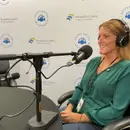
Send us Fan Mail In Pensacola, where can K-8th graders learn to swim without soaking your wallet? Megan Oberholzer is the Aquatics Director for Escambia County Public Schools and she shares a summer program that’s affordable and competitive to help kids keep swimming. Guest: Megan Oberholtzer | For more information, please contact Megan Oberholtzer at Booker T. Washington High School, 850-494-5681, moberholtzer@ecsdfl.us Vote for Voices United in Education as "Best Podcast" 2026 in InWe...


In Pensacola, where can K-8th graders learn to swim without soaking your wallet? Megan Oberholzer is the Aquatics Director for Escambia County Public Schools and she shares a summer program that’s affordable and competitive to help kids keep swimming.
Guest: Megan Oberholtzer | For more information, please contact Megan Oberholtzer at Booker T. Washington High School, 850-494-5681, moberholtzer@ecsdfl.us
Vote for Voices United in Education as "Best Podcast" 2026 in InWeekly's Best on the Coast! https://form.jotform.com/261185754425158
This helps connect local families with the resources they need & the stories that get missed.
Learn more about Escambia County School District: https://www.escambiaschools.org/
Find additional links: https://www.voicesunitedineducation.com/podcast-episodes
Host: Meredith Hackwith Edwards
The Summer Sea Lions, we offer both swimming and springboard diving. So if you want to do just one sport, it's $45 for the summer. If you want to do swimming and springboard diving, it's $65 for the entire summer.
SPEAKER_00Welcome to the Voices United in Education podcast. Each week we showcase the teachers, administrators, and community members who go the extra mile to contribute to the success of every child in Escambia County. You'll meet the real people behind the titles and learn about the amazing resources to support your child's success. We all know the kid that has to be told a million times that pool time is over. And while it's exciting to see Gulf Coast kiddos have an enthusiasm for the water, how can parents leverage their child's interest when swimming programs are so expensive? My next guest is the aquatics director for Escambie County Public Schools. And today she's going to share a summer program that's affordable and competitive to help kids keep swimming. Building athletes and shaping character, Megan Oberholzer. Thanks for being here. Oh, thanks for having me. I'm so excited to be here. Me too. I love to talk about swimming. I love to talk about the water. And this program has a cool name. It's called Summer Sea Lions. Is there a story behind that? No, not really. That was just the creative name that we came up with.
SPEAKER_01Well, it's cute. I like it. How did the program come about? So the pool was built with the school back in 1982. And, you know, the executives downtown at the time were trying to figure out how to make best use of the pool. They knew that in the fall it would be devoted to the high school season. And that's determined by the Florida High School Athletic Association. And they knew that in the winter they wanted to offer up a middle school swim season closely aligned with how we run the high school season. And during the spring, they wanted to offer up something for the elementary kids. So that way, in the course of the school year, any child that's enrolled in any of our schools, K through 12, had an opportunity to participate in any of our programs. And then during the summer, they thought the community does so much and gives so much to the schools that they wanted to offer back a little bit during the summertime. And they thought opening it up to the community and offering a low-cost summer league program would be an excellent idea to let those families that aren't able to afford the other swim programs have an opportunity to join. And it's been in existence ever since.
SPEAKER_00Yeah, for those that don't know, swimming programs, the cost there can really rack up fast. What's the cost of other swimming programs compared to the Summer Sea Lions?
SPEAKER_01So the Summer Sea Lions, we offer both swimming and springboard diving. So if you want to do just one sport, it's $45 for the summer. If you want to do swimming and springboard diving, it's $65 for the entire summer. And that includes a t-shirt and a swimming cap. And the other programs are upwards of $100, more than $100. So we are significantly lower costs than any of the other programs in the area.
SPEAKER_00And what's the program include exactly? What are the kids learning?
SPEAKER_01So there's obviously varying ability levels. You know, we have kiddos that come out that have been a part of the program for many years, or they've done another program with us and they're starting the sea lions. So obviously they're a little bit more advanced. They're focusing on stroke technique and fine-tuning their swimming skills and working on endurance and all of that stuff. And then we have the kids that it's their first summer and they're just starting their journey in the sport of swimming. And so obviously they're learning the basics. They're learning how to be safe in and around the water. They're learning the four different swimming strokes: butterfly, backstroke, breaststroke, freestyle. They're learning how to use the blocks to start a race, flip turns, proper breathing techniques. So it's not an all-in-one practice. Everybody, depending on your ability level, is doing different things and they're split up in groups depending on what you can and can't do.
SPEAKER_00So it's up to the coach to kind of assess okay, who's here today and what are we working on? Exactly. That's kind of nice though. It's really customized to the kids that are there.
SPEAKER_01Absolutely. You know, somebody that has been in the program for years is not gonna want to learn how to breathe properly and freestyle because they've been doing that for years. They're gonna get bored real quickly. But somebody that is brand new can't do what the kids that have been doing this for years can do. So you kind of have to vary it up a little bit, you know, or else it's it's not gonna work. And so they've done a really great job of really figuring out how to split those two ability levels up.
SPEAKER_00Well, kids would get discouraged.
SPEAKER_01Absolutely.
SPEAKER_00You know, because if you're already advanced enough to know about breathing techniques while swimming, you're gonna be discouraged that you're bored. But if you're you're not knowing those basics and the kids are zooming past you, you're gonna be discouraged because you feel behind. And then parents will feel that discouragement too, because they feel very empathically for their child. So absolutely. You don't want to be the one that falls behind or the one that's way advanced.
SPEAKER_01So it works out well. You mentioned safety. What kind of safety stuff are they learning? Being safe around water, knowing not to dive in a shallow body of water, knowing not to run on a slippery pool deck. If you're not a strong swimmer and you see somebody struggling, knowing not to go after and get that child, you know, run for help or throw a buoy out. All of the things that go along with when you think about being safe around any type of body water, pools, the Gulf of Mexico, you know, lakes, oceans, whatever it may be. There's so many different safety discussions that need to be had. And especially for us, you know, where we live, we're surrounded by water. So it's so extremely important. I read a statistic the other day that like 75% of houses in Pensacola have a pool.
SPEAKER_00Whoa, really?
SPEAKER_01Yes. So it's just so important for these kids to be exposed to water safety and how to be safe in and around the water.
SPEAKER_00Yeah, even if they don't have like a lifelong interest in swimming competitively, there is a safety benefit there of just plain simple, keeping your kid alive. Exactly. Is there any inter-student mentorship happening where like an advanced student would be helping a beginner student? Yes, there is.
SPEAKER_01We have some of our lifeguards at the pool that have been through the program that are now lifeguarding for us, and they're helping the head coach as well. You know, I see it a lot when I'm observing the practices. They'll pull somebody out to demonstrate a specific skill that somebody has accomplished and other people are struggling in. You so there's a lot of peer mentorship going on for sure.
SPEAKER_00Well, and what you're talking about then just then is recognition as well. Absolutely. I'm imagining a little confidence boost for that kid who's the shining star. Yes, indeed. What other competitive benefits do you see happening for the kids? Because you yourself were a competitive swimmer. And so you've absorbed those benefits fully. But for the kids, getting them the first time and parents maybe who haven't had any athletic experience, can you lay out what those benefits might be?
SPEAKER_01Oh, yeah, gosh, there's so many. I just think that getting your child involved in any type of sport, whether it be swimming or anything, is so important, or even just an extracurricular activity. I mean, they're really learning life lessons that aren't necessarily being taught in the classroom. They are learning about discipline and consistency and that progress comes when you show up. And that means showing up when you're tired, showing up when you're bored. And that can really carry over into the classroom as well. You know, if your child's struggling in math class or English class or whatever it may be, you know, if they're learning about discipline and consistency on the field or on the court or in our case, in the pool, they're going to be nine out of 10 times more disciplined in their studies and more consistent in their studies. And they're going to keep showing up for their studies because they know if they do, that the progress will show up too. You know, and they're learning about how to be resilient. They're going to lose. They might get injured. They might plateau, you know, but learning how to fail and then adjust and come back and try again is a huge life lesson. Not only to mention all the emotional skills they're learning, you know, they're learning about winning and losing and how to be a good winner and how to be a good loser, because those are equally important in their own rights. And they're learning how to self-control and be patient and all of those things and social skills, teamwork, how to be a good teammate.
SPEAKER_00Well, to the teammate part is so interesting because swimming's like a solo team sport, because you you have your individual goals, your personal best, which are very precise and I mean to the tenth of a second. But then you also have that team aspect. So learning how to cheer for your teammate, even though they might be doing better than you, and and noticing, I mean, there's so many layers to that, but the personality skills, the the social skills, like teamwork. Yeah.
SPEAKER_01Talk to me about the social skills. Oh man, these kids, they show up the first day and they're shy as can be. And so some of them don't want to be there. They're being forced to be there by their parents. But by the end of the summer, I mean, it's it's incredible to see the growth in their personality, you know, from the beginning, the first very first day when they're nervous and they walk into this big pool and mom's making them be there, they don't want to be there. And by the end, you know, at the championships, they are just having the time of their life and they're best friends with all of their teammates, and they're on the side of the pool cheering them on. And it's just so fun to see the growth that they have being involved in this sport.
SPEAKER_00Are you thinking about any specific student in particular?
SPEAKER_01Oh man. There there was this little girl that showed up for sea lions on the first day, and she was in, I think she was in the fourth grade at the time. She was cute as could be, but she was in tears. She did not want to be there. But mom wanted her to be involved in something, and so she picked swimming and she just cried the entire day. How old was the entire practice? I think she was in the fourth grade at the time, just boohooed the entire practice the first day. And then day two, her personality was a little different. She wasn't crying, but she didn't want to be there. And you know, just watching that growth through that summer from the boohoo crying the first day till the end of the summer. I mean, if we gave out awards, she would have gotten all the awards, most improved, most dedicated, most spirited, all of the things, you know. And then come middle school season, so she came out her fifth grade summer as well. And then come middle school season, she started swimming for her middle school team. And now she's in one of the high schools and she's swimming for the high school team, and she actually wants to get her lifeguarding certification and work at the pool. So it's just stories like that where like they they want nothing to do with it, and then all of a sudden their life is consumed by it because they fall in love.
SPEAKER_00So this could not only be a social skills booster, but also a job opportunity.
SPEAKER_01Oh, absolutely. Yes, we are we employ anywhere from 10 to 15 lifeguards at a time per season. So yeah, we have had most of our lifeguards have come through one, if not more than one, of our programs.
SPEAKER_00That's so cool. Yeah. And for Summer Sea Lions, who runs that? Is it instructors and then on top of that, lifeguards, or are the lifeguards the instructors?
SPEAKER_01We have a 12-month instructor that is basically the head coach. And then the lifeguards are the assistant coaches. So we hand pick one or two or three lifeguards that will help out with the program. And then the 12-month instructor oversees the program and is the head coach.
SPEAKER_00And is the program at all connected to the school swim team?
SPEAKER_01No, they are two totally separate entities. And I think a lot of people have a hard time separating Washington High School swim team with the other things. Washington Aquatic Center is just called Washington Aquatic Center because it is located on Washington High School's campus, but it really is a district pool. It's not Washington's pool. All of the high schools practice in it, all of the middle schools practice in it. So it's not just Washington's pool. There's so many different programs that run through there.
SPEAKER_00I didn't realize that all the other high schools practice there too.
SPEAKER_01Yeah, so I think a lot of people don't even realize that all the high schools have a swim team because they think, oh, our school doesn't have a pool. There's no way we have a swim team. But all of the high schools practice and compete at Washington.
SPEAKER_00Wow, that's so cool. Okay, so tell me about the pool. How big is it? Is it inside, outside, heated? It is inside and it is definitely heated. Thank goodness.
SPEAKER_01Yeah. It is it's small, it's six lanes by 25 yards. And we have an upstairs balcony for the spectators that seats 220 spectators.
SPEAKER_00Okay, wait, wait, wait, wait, wait. That's major. Because if you've ever gone to a swim meet, and I know you have, yes, and I have, and it is not the best viewing experience. Yes. It's loud, you can't see, you're there all day. So that's a huge deal to have an actual assigned dedicated seating area. Because at the other ones I've been to, we've got camping chairs. It's very tents everywhere. It's true. Yeah, tents outside, people who are peeking in. So that's a big deal.
SPEAKER_01It is. I wish it was bigger because we do sell out for most of our meets. And unfortunately, there's parents that can't get in and see their child swim because we have a max capacity. Unfortunately, there's nothing I can do about that. But it is so nice to have that dedicated space for sure. Cause then, you know, it keeps the parents off of the pool deck from the kids. The kids are able to hang with their team and their coaches and all the things. So yeah, that that part is really nice. And then we also have a handicap ramp. So during the summertime, we have Special Olympics come in and autism Pensacola and some other special groups. We have a little waterproof wheelchair basically that we move them from their regular chair into the waterproof wheelchair and we can roll them down the handicap ramp and they get to get out of their chair and feel weightless. And it's it's really fun and cool to watch.
SPEAKER_00That is so cool. So this pool is really a multi-purpose pool for the community. It's not like gatekeeped by just the high school. Absolutely. How many kids can participate in the Summer Sea Lions? Is there a cap? Because you said there's a capacity for people in the area. Is there also one for the program? Not really.
SPEAKER_01I mean, we have had summers where we were very, very large and it might have been better if we put a cap on it, but we just don't want to turn around anybody. We want anybody that wants to be there. We want to welcome them.
SPEAKER_00And can parents watch from that viewing area during the practice? Yep, we encourage it actually. That's amazing. Yeah. What's the time frame like? Um, when does it start during the year? When does it end? What day of the week? That sort of thing.
SPEAKER_01So unfortunately, we're under construction. Washington High School is under construction, which involves the pool. So we are going to be closed the first two weeks of the summer this summer. So we will not have our first practice until June 15th. Normally we start the Tuesday after Memorial Day. We start right away, but we're going to have a delay in our start this year. So our first practice will be Monday, June 15th. We offer, like I said, springboard diving. So we have two one-hour sessions that are available for springboard diving, and that's from 2:30 to 3:30 or 3:30 to 4:30. And then our swimming practice sessions are from 4:30 to 5:30 or 5:30 to 6:30. And we ask that the kids commit to at least two practices a week. We do have practices Monday through Thursday. So we they come all four days, and we would love for them to come all four days, but we ask for a minimum commitment of about two days a week.
SPEAKER_00That's so much better than dropping your kid off at a community pool where they just run amok, right? They're actually learning things. They get real swim gear. Yes. And that I thought the cost was monthly when you were talking earlier to me off mic about like, oh, it's $45. I was thinking, oh, cool, $45 a month. That sounds reasonable because that's of what like around a YMCA gym membership for I think in a family, but to have that before the whole summer season is such a good value.
SPEAKER_01And to be transparent, that money goes into an internal funds account that we have at the school that helps pay for repairs and updates and chemicals and supplies that we may need and stuff. So it's all stays in house. So it's a good cause. Yes. Who's qualifies to participate? So you do have to be able to swim 30 feet unassisted. So not touching the sides or the bottoms during that 30 feet. If you can do that, you're qualifying. Okay, let's talk about what swimming means.
SPEAKER_00I mean, what if it's just like down, ugly, like like barely making it, but the kid makes it like they don't drown, but it's not pretty. Does that qualify? That qualifies.
SPEAKER_01Okay, that's good to know because they did not touch the side or the bottom. They can't quit in those 30 feet. Okay. They make the 30 feet, they're in.
SPEAKER_00Okay, that's really good to know. So you said any child, is there an age bracket there? Yeah, it's uh kindergarten through eighth grade. Okay. And that's about the time you started to swim too, right? Yes, I started in kindergarten. Wow. What's present in your life that wouldn't be had you not started swimming that young?
SPEAKER_01Oh wow, good question. I think just my drive to stay healthy and stay active. And I think that it really drove me to be dedicated to things. And I think that all of those would be missing had I not participated in the sport.
SPEAKER_00So you really think it was chicken egg wise, it was definitely the swimming that spurred that. It wasn't you had that and then found swimming? Absolutely not.
SPEAKER_01Huh.
SPEAKER_00Yes. That's pretty major. Yes.
SPEAKER_01Once you become a very year-round swimmer like I was, you know, the sea lions is more let's get these kids interested in sport and have fun in the sport. But there's another level that you can go with the sport. And what's year-round, it's it's swimming in the morning before practice for an hour and a half, it's swimming after school for two and a half hours, it's swimming on Saturdays for three hours. But it takes a lot of dedication to excel in the sport of swimming. But there's so many different levels that you can be in the sport.
SPEAKER_00And levels of benefit also, right? Because I think one of the big hesitations for parents signing their kid up for any sort of extracurricular thing is like, oh goodness, are we gonna follow through with this? Is this gonna be a money pit? But for that price, it's such a good value for them to at least learn safety, make some friends, and learn some social skills. That would be like level one. And then level two is they find a sport they really love. They get addicted to lifelong fitness and being active. And then beyond that, it's high-level competition, potentially scholarships and and then also the job part. So there's something for everyone.
SPEAKER_01And it really is a lifelong sport. If you've ever been to the YMCA in the morning, they've got water aerobics going on. And I mean, there are 85-year-olds in that water. It's really a sport that you can continue on for the rest of your life, but so good for you, so good for your bones and your joints, and obviously works all of your muscles. But yeah, I mean, for the cost, it's it's great. I mean, I just signed my son up for another sport that I won't mention. And I'm like, oh God, did I just spend a lot of money? And she's gonna be done with it in a couple weeks. So for the cost, you can't beat it. Why not try?
SPEAKER_00I would imagine the injury rate would be low as well. Very low.
unknownYeah.
SPEAKER_00Very low. That's big because on top of equipment costs, we don't want extra medical appointment costs, right? Right. Yeah. Well, this is so cool. Thank you so much for sharing it. If a parent is interested, how do they enroll in that? Is there a specific date cutoff that happens every year? Like if you don't sign up by April, you can't enroll by that following May.
SPEAKER_01Nope. And actually, um, we're gonna have registration on that Tuesday after Memorial Day, Tuesday through Friday. They can come to the pool anytime between nine and five o'clock and register their child and pay and get their t-shirt and their cap. And, you know, unfortunately, like I said, then we have to take a two-week break because the school's shutting down. But then we'll be ready to get going on June 15th. And if somebody is not, if they're out of town June the week of June 15th and they can't come until the following week, that's fine. There's there's really no cutoff. I mean, we've had kids join in July, like, sorry, we've been on vacation for the whole month of June, but we're here now. That's totally fine.
SPEAKER_00Okay. And registration is only in person?
SPEAKER_01Yes, we can't accept electronic forms of payment. So they do have to pay in cash or check.
SPEAKER_00Okay, got it. Okay. And then is that when they do the swim test? Or okay, so that's an important part of the in-person registration process too. So they should come with some swim clothes, swimming swim attire, okay, bathing suit and towel. Okay, awesome. Well, thank you so much, Megan. This was really cool. Thank you for having me. Thanks for listening. Be sure to subscribe and share. Voices United in Education is a production of Escambia County Public Schools.


