Ep 203 | 2025-2026 Teacher of the Year: Finding inspiration in error!
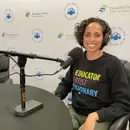


According to Albert Einstein "Anyone who has never made a mistake has never tried anything new." Trinity Barnett is the 2025-2026 teacher of the year, using art to build confidence and create comfort around experimentation. In her life and classroom, she models how mistakes can lead to inspiration. In this episode, you’ll hear her unusual path to education and her imaginative approach to art for all.
Guest: Trinity Barnett
Learn more about Escambia County School District: https://www.escambiaschools.org/
Find additional links: https://www.voicesunitedineducation.com/podcast-episodes
Host: Meredith Hackwith Edwards
You know, when you're in school and I was this way, so I can 100% relate to my kids who are like this. Like they want everything laid out for them. Like it's like step one, step two, I can do it, I can get the right answer, which is great in math class, you know. In art, it doesn't always work that way, right? Like there's a certain level of following directions that we have to do. It's not a free-for-all with the supplies, right? But at some point, I'm gonna let you make choices. And sometimes you have to live with those choices, right? So if you do a certain thing and it doesn't quite go the way that you wanted it to go, like you have to figure out how to pivot. Like, what do we do now?
SPEAKER_00Welcome to the Voices United in Education podcast. Each week, we showcase the teachers, administrators, and community members who go the extra mile to contribute to the success of every child in Escambia County. You'll meet the real people behind the titles and learn about the amazing resources to support your child's success. In a world of AI, filters, and otherwise highly edited video, developing brains may interpret the world as a first-try success reality, reinforcing their anxiety that mistakes equal failure. My next guest is a teacher using art to build confidence and create comfort around experimentation and model how mistakes can lead to inspiration. She's the 2025-2026 Teacher of the Year, and today she's going to share her own unusual path to education and her imaginative approach to art for all. Painting the possibilities, creating confidence, and building on imagination, Trinity Barnett. Thanks for being here. Thank you for having me. Your path to teacher began with an allergy.
SPEAKER_01It did. That's a good way of putting it. It did. Yeah. So when I was little, all I wanted was to train dogs. I wanted specifically to train like police dogs. That was my dream. And when I was young, I had a dog. But then slowly, as I grew up, every year, my allergies got worse and worse and worse. It got to the point where I couldn't have a dog, but I could still be around them. And then the next year it was like, oh, can't do sleepovers, but I can go to my friend's house. And then eventually, by the time I got to high school, it was like, I just cannot be around dogs at all. Like that was not going to happen for me. So I was sitting in uh, I remember exactly where I was. I was in my stagecraft class. And I was like, man, like I don't know what to do with my life because all you know my childhood, I just wanted to be this dog trainer. But I was like, I bet I am not allergic to dolphins. I'm gonna go train some dolphins. So that was the path, the puppies of the ocean. Yes, exactly. That that was what I envisioned. So I went to the University of Central Florida and I studied psychology. You can either, to be an animal trainer, you can either take the biology route or the psychology route. And I wanted to take the psychology route. So I did that. And while I was in school, I worked at Disney and I got to work with the dolphins. I got to do their marine mammal internship and it was amazing and loved the animals. But it wasn't like quite a fit for my personality. So I ended up working at several different zoos and aquariums from Texas to Virginia, Tampa, Panama City, all over the place. And every single job that I had, they were like, man, you know where you would be a good fit? You should go to the education team every single time. Like, didn't matter what job I started in. I ended up on the education team every single time. Eventually, I met my husband. We got married. He ended up getting stationed here in Pensacola. There's really not any place to be an animal trainer here. So I was like, well, let me just sub, you know. I thought we were going to be here for three years and then move away. So it was supposed to be like a temporary thing to do to just fill time. But I really loved it. Like I just loved subbing. And I ended up subbing at Blue Angels and they convinced me to get certified. They were like, hey, like we we have somebody who's leaving and we want you to fill this spot. So go get your certification. So I did. I got certified in K through six and I taught fifth grade for five years. And then eventually I switched over to be the art teacher. So here we are. It's been a long, windy road.
SPEAKER_00Yeah. Yeah. And even the way that you were switched to the art teacher, wasn't there a bit of like his mit involved in that?
SPEAKER_01Yeah, kind of happened really, really fast. So I had originally, when I was subbing and thinking about, oh, I would like to teach someday, I thought, you know, I would love to teach art, but it seemed so, I don't know, like a pipe dream. You know, there's not that many art teacher jobs. And I was just like, that doesn't seem very realistic for me. So I went ahead and took the fifth grade spot. But the whole time, you know, in the back of my head, I'm like, that would be so cool, you know? And so one day I finally went to my art teacher at Blue Angels and I was like, hey, like I've been thinking about this. I've been ruminating, you know, like I think that I would like to teach art, but I was scared to leave Blue Angels. So I was planning on studying over the summer, getting my art certification, and then just seeing, you know, what popped up, if something good would pop up. And she, I remember we were standing outside her room and she like drugged me into her classroom and she's like, Come here. And like, nobody knows this. She's like, This is top secret. She's like, I'm moving in a couple of weeks. Like, you have to go get certified right now. I was like, oh my gosh. Okay. So I had a little baby at the time, and I would put him in his crib and throw a blanket over myself and like reach one hand in the crib and pat him to sleep. And then I'm like studying on my phone. I can't gave myself one week. I'm like, okay, Picasso, okay, the Renaissance, you know, whatever, learning all these things. And yeah, I went and took the test, passed it. And then she moved and I took over. And this was in the middle of COVID. So it was crazy. I took over, never taught art before, had no idea what I was doing. Half the kids were in school, half the kids were on my computer. I was just like, all right, here we go. Like we can we can make it happen. So I've come a long way since then.
SPEAKER_00You have come a long way, but it doesn't surprise me that you made it happen because, like being an animal educator, that is bridging two worlds. And so it in COVID, you were like, okay, virtual, okay, you know, in person you are bridging those two worlds, but you had already had experience with that. Yeah. Because as an animal presenter, you're like, you know, animal people aren't usually people people for sure. And so no wonder they're like, ooh, Trinity, we love you. We need you to be the presenter. Tell the story about the Dallas Hotel, because I think that just paints the picture of being a flexible person when it comes to making things happen.
SPEAKER_01Yeah. So, okay, when I worked at SeaWorld in San Antonio, part of my job, I was an animal ambassador. So we would train the animals to be comfortable, going pretty much anywhere and talking in front of different crowds and stuff. And so this one time we were going up to Dallas to be on the news. And so we had to have the animals with us overnight because Dallas is not very close to San Antonio. So we packed them all in a van, we take them to the hotel, and then they're like, okay, like here are your animals, like keep them all comfortable until we go on the news tomorrow. And I'm like, okay. And I'm looking around at everybody I got. I'm like, ha ha. Luckily, I had a suite, so there were multiple rooms. I had an alligator, an armadillo, and a handful of penguins. So I made it freezing cold in the hotel and put the penguins out in the little living room in their kind of like a playpen, basically. They were out there. And then I had the alligator in the bathtub and I blocked all of the vents to the bathroom and blocked all of the vents to my room because I'm sitting in there with like a hundred layers of clothing, trying not to freeze. And then the armadillo stayed in the little kitchenette area too. So and I didn't prepare for this. So I'm just like using the stuff that I have, you know, like random things I can find in my suitcase to like cover up the vents and make it all closed. Yeah, which is basically being a teacher using the random things. That is 100% what we do. Yes. So we're making paper mache pears right now. I'm like, okay, what can we make this out of? So they're made out of old like uh grocery bags and old newspaper and aluminum foil and straws. Like that is what, yeah, but they look cool. Yeah. You'd never know.
SPEAKER_00Well, I think it was in your Angel in Our Mids article that you talked about how that mistakes aren't failure. Like you can actually get inspiration from your mistakes. 100%. And it like improvising is an ingredient in all that, right?
SPEAKER_01Yes, yeah. It's a skill. And sometimes the kids, you know, when you're in school and I was this way, so I can 100% relate to my kids who are like this. Like they want everything laid out for them. Like it's like step one, step two, I can do it, I can get the right answer, which is great in math class, you know. In art, it doesn't always work that way, right? Like there's a certain level of following directions that we have to do. It's not a free-for-all with the supplies, right? But at some point, I'm gonna let you make choices. And sometimes you have to live with those choices, right? So if you do a certain thing and it doesn't quite go the way that you wanted it to go, like you have to figure out how to pivot. Like, what do we do now? So, my favorite example of that is a few years back, we were doing a Chinese New Year project and it was the year of the tiger. So I was walking them through like how to make tigers. And so I drew my eyes a certain way. And so a lot of the kids like to follow along with me. They're free to do, you know, whatever they would like to do with theirs, but a lot of them try to follow along. And so one kid he messed up, but we were using oil pastel. With oil pastel, you really, there's not a lot of erasing happening there. So he comes up to me and he's like, I messed it up. And I'm like, Well, it doesn't have to look like mine. Like, what else could you do? And he really didn't need any prompting beyond that. Like, as soon as I said that, he was like, Ooh, I got it. And so he takes off back to his seat. I really kind of forgot about him until a few minutes later, I see that everyone in the room is now doing like crazy stuff with theirs. And I'm like, what happened? So he, because he had smudged his eye or you know, done whatever he had done with it, decided to cover it up and put an eye patch on the tiger. He's like, mine's like a pirate, you know, whatever. And so then the kids were like, ooh, like I want that. So like now I had like pirates and sunglasses and like all kinds of stuff, you know, which is great because then they were pumped about it. Like, if I had given him the solution, I don't think he would have been that excited about it. But because it came from his idea, you know, his mistake that he had messed up and had to figure it out on his own, like he was super proud of that thing, you know, and it came out super cool. So I don't know.
SPEAKER_00I loved it. I mean, I if I had a t-shirt with a tiger with an eye patch, I'd wear that t-shirt so proudly. I know. That sounds like like an album cover or something. You know what I mean? Is it easy for you as an art teacher to see these classroom moments translate into real life? Or is it because you're kind of in the classroom siloed, if you will, you don't get to see how it like does it, do you see an actual translation into behavior or and otherwise the lights going off in their little eyes? Like, oh, in my life, much like your life, you know, you were like, I'm going this way to be a dog trainer. Just kidding. I have hives now. I I help dolphins. Just kidding. We moved to Pensacola. There's no jobs to train dolphins. So now I'm a teacher. And do you think that they're making those connections yet?
SPEAKER_01I don't know if they actually put two and two together to realize that it's happening. I can see them getting better at this skill because I get to watch them grow up now. But I don't know if you asked them if they would be like, oh yeah, I learned this in art class. You know what I mean? But I don't think so. But it definitely works. And it's so funny because like I have learned by teaching it to them to do it more in my own life, to let go a little bit. Because, like I said, I was the perfectionist child. I needed to have straight A's. I remember crying and crying and crying. I was in the second grade and I spelled bacon wrong with a K. I spelled B-A-K-O-N. Not on a test, just on a worksheet. And I cried my little eyes out because I was that much of a perfectionist. And so I think if I had had me as an art teacher, like that might have been a little bit tough for me to like have this much freedom and have to make choices and mistakes and like work my way through it. But I think it would have been good for me, you know, because I was just looking for the right answer all the time. Like I wasn't exploring my creativity. And like in my artwork, I had a grandfather who made realistic artwork and I was always trying to emulate what he was doing. And I, you know, was seven, eight, nine years old, didn't have the skill to make the things that he was making. And so I kind of was like, I'm done. Like I don't like art for a long time. And then it wasn't until I think probably high school that I found myself like wanting to do it again, but being scared to, you know, not be good enough. So I really just sort of rebelled against the realism and went down a different path. I made everything very flat, very graphic styled. And I said, like, oh, I'm doing this because I like it. But I was really doing it out of a place of weakness, you know, like I just didn't want to be vulnerable and like fail at doing something else. And so it took a really long time, really, until I started teaching art again and like learning from the kids how to have this skill to be able to embrace whatever came out of me. And so now when I paint, I paint really messy and then sort of like bring something out of the mess, but leave some of it there so you can see the history of like what happened, you know, the mistakes, as you will, of what went into the process. And so I try really hard to talk to them about that all the time. Like they're like, mine's ugly. I'm like, it's not done yet, right? Like it has to go through this stage. Like this is part of the process. And I I hope that they will learn it faster than I did. That's my hope. You know.
SPEAKER_00Do your students know that story about you?
SPEAKER_01Yeah. Yeah. We talk about it.
SPEAKER_00Do you ever see students that you're like, oh, that's mini, mini trinity?
SPEAKER_01Oh, 100%.
SPEAKER_00Yeah. Really?
SPEAKER_01Yeah. All the time.
SPEAKER_00Do you when we had some sacred heart people on the show to talk about why kids worry? It was a long time ago. But they had created a report around it. And one of the things that they talked about of why kids worry is this perfectionism, exactly what you're talking about. Yeah. And as you're telling me this story, I couldn't help but think, oh my gosh, you're such a perfect person to be in their lives via art. Because they need to know, like, hey, this process is very human. You're not a freak. And also no one is expecting you to get it right the first time. Right. And sometimes the outcome is better because you didn't get it right the first time.
SPEAKER_01Exactly. Right. If you all just follow along and make what I am making, they're all gonna look exactly the same. That's called paint by number. Right. That is so boring. I was like, y'all, if we go, because we do an art show at my school every year in April. If you show up that night and I took away all the labels and I didn't have your name on it, if you cannot find yours, I failed. Like something went wrong, you know? Because you should have made choices along the way. If it's as simple as like the color or the shape of something or whatever, that's fine. As long as you made some choice and you can explain to me why you chose that, then I've done my job, right? If you can find yours on the wall without me putting your name on it, then you have some ownership over that piece of art. If they all look exactly the same, like that is so lame. You know, I don't want to look at that. You don't want to look at that. Don't copy mine. I don't want it to look like mine. So it, you know, I everything's like a balance. I think about this literally probably 10 times a day. So like every single project that we do, I'm like, how can I give them enough choice where they're able to choose theirs, right? They know what theirs is. They are able to say, like, I made this choice because of XYZ, but I don't give them no instruction, right? Like I don't want to just give them supplies and let them make stuff. I wouldn't want to go to a class like that. Like I can do that anytime at home, right? You're not really learning anything from that. So it's the balance between structure and freedom that I'm trying to find so that they can be proud of what they made and push themselves beyond what they would make if they were kind of left to their own devices, but have ownership of it. That's literally it's like all I think about all the time.
SPEAKER_00That is worth thinking about because it's a big puzzle. Right. Because you teach pre-K through fifth. Right. Do you see the creative process differences in those in that age range? Oh, yeah. Yeah, yeah, yeah. What does that look like?
SPEAKER_01I would say the younger ones are more fearless. Like they're not really scared of judgment yet. As they get older, they start getting more self-conscious, you know, they start looking around and what everybody else is making, comparing themselves to other people. So that part's hard. So I try to let them have more tools so that the scariness is gone, right? Like, so if they want to bring in their Chromebooks to look at a reference image, like I need that too. I have no ability. Like, if you tell me close my eyes and picture a horse, I got nothing, absolutely nothing. So if you show me a picture of a horse, I can draw or paint a horse for you. That's no problem. But otherwise it's gonna look like a two-year-old did it because I'm like, I don't tail, legs, you know what I mean? Like I have no imagery in my mind. And so I know some of them probably don't either. And so that's intimidating if somebody's like, oh, here, just do it with no reference. You know, the little ones, they don't they don't need that. They're just like, woo-hoo, like, yeah, I'll draw you a horse. Look at it, you know. So that part is fun with the little ones. They they're just not scared of messing up. In fact, I don't know that I've ever had a kindergartner be like, I messed something. You know what I mean? They're just like, they're happy just to make stuff. Yeah.
SPEAKER_00Man, such a lesson we could learn from them five-year-olds. Right? As the teacher of the year, when you got that, you you said, quote, you didn't think someone like me would win. What did you mean by that?
SPEAKER_01What did I mean by that? I don't know. I don't know. I think several things. One, I think as the art teacher, I wasn't expecting this sort of recognition, you know? When I was looking at the questions they were asking about data and all of that stuff, I was like, ooh, like I don't know that I have a good answer for that. Like, I don't have numbers to back up in the same way that I did anyway as a fifth grade teacher. And then I think also when I picture like a stereotypical teacher, I don't really think that I fit that mold. Like I'm a little all over the place, you know. At the end of the day, my classroom is a disaster. There's stuff everywhere, I'm covered in paint. I am constantly changing my mind about things, you know. I don't have the whole year planned out necessarily. So the kids will be like, what are we doing after we're done with this project? I'm like, it's a secret because it's a secret from me too. I don't know yet. So I don't know.
SPEAKER_00Okay, we just we just unlocked a per parent tip and we didn't know it. Parents, if you don't know the answer, finger guns wink and say it's a secret.
SPEAKER_01I do not know. You know, I have an idea. Like, oh, we haven't learned tint yet, but how are we gonna learn tint? I don't know. Like, I don't, I don't know what the plan is yet. And that's what I give myself parameters because there's too much freedom. Like, there's no curriculum. You're just making everything up as the art teacher. So there's standards, but they're so vague, you could do anything. You know, you could teach tint in a million and one different ways. And so I every year our art show gets a theme. So this year, for example, is food. We've also done like endangered species or art history. Next year we're doing a science theme. And so I know that I have to hit the art standards and I know I have to fit it into this theme. And so from there, I'm able to kind of narrow myself down because otherwise it's just way too much freedom. I'm like, I can't pick.
SPEAKER_00I don't know. Well, also, there's that pre-K through fifth grade thing going on. And I imagine every batch of kids, if you will, has their own, you know, set of foundational skills and abilities and confidence and willingness to participate. So as a teacher, you kind of have to be just like you were in that Dallas hotel room, going, all right, what do we got? Let's do an inventory and then work from there. Yeah.
SPEAKER_01And sometimes, you know, second grade all tends to be about the same ability, but you just never know. Sometimes you get a class and you're like, wow, like you guys are amazing. Like we could move really fast and like do some really advanced stuff. So I do try whenever I get a class like that to like go above and beyond and like give them extra stuff to do. So this year I have one class that's just really, really amazing. Like I don't have to waste any time on behavior with them. Like they come in, they sit down, they're so ready. Like, let's do it, you know. I really think they would spend their recess in my room if I gave them the chance. Like they just want to be there, you know? And so we were sewing, and that's not something that I would do with every single class because there's needles involved and all that. But I really do trust them, you know. So we made the little stuffed dino nuggets. They're so cute. I love them.
SPEAKER_00That's adorable. Yeah. What what do you think parents would universally understand and appreciate about the skills that you're giving their kids? Because sometimes parents don't quite get it. They think, oh, macaroni and glue.
SPEAKER_01Yeah. So I think one, lear like understanding that what we are doing in the art room is helping their kids build confidence, right? That's a big one. But then also, like a lot of the kids spend a ton of time on the computers. And so they're losing their ability to do fine motor skills. I can see the difference. Like sometimes I have a kid who just blows me away. I'm like, wow, like your skills are amazing. Like, tell me what your setup is at home. Like, I know you do art at home. It's very obvious. So, you know, and those kids always are like, oh, I have a dedicated space, you know, I can get stuff whenever I want. I have the freedom to blah, blah, blah, you know, whatever. And then I have other kids who not so much. And then I hand them a Sharpie, and they're like, my mom says I'm not allowed to use Sharpie. I'm not allowed to use scissors at home, you know? And it's like they need that stuff. And not everybody's into it. My own son, he has a little setup. Does he use it? Not really. Like he doesn't really like to draw, he doesn't really like to paint. But you give that boy some cardboard, he'll make you a sculpture. What? You know, yeah. So that's his thing. Like he just loves destroying stuff and then building it back up again. That's his thing. So we got an engineer on our hands. That's exactly what he wants to do. He said, I want to be an engineer, I want to be an inventor. So we'll see. But the point is, like, I have spent time, like he had Giving him access to supplies to see what sticks with him, you know? And I just think it gets forgotten, you know, the iPad kids, as they say. It's just there's a lot of time spent on the digital stuff, even in school. Like, there's nothing wrong with that necessarily, but I think we don't want to go so far in one direction that we lose the ability to do the other stuff, you know. I have kids in fifth grade who don't know how to tie their shoes. And I'm like, trying to teach them how to sew. And I'm like, just tie the knot like you would tie your shoes. Or like, I only have Crocs. I'm like, oh no, okay, let's start at the beginning. So yeah, it's true. But so those the fine motor skills, I think, is a skill that they are definitely getting in the art room that they may not, depending on who their teacher is, some of them love to do arts and craft stuff in the classroom, but not all of them do. And a lot of them don't have time. There's a lot to be doing in the class.
SPEAKER_00So wow. Yeah. What about the underdog skills that are learned through art class? What would you consider those? What do you mean? Well, when I think, I think you touched on them earlier. When I think of underdog skills that I've achieved through art, it's a little bit what you're talking about with your own story about letting go of formulaic paths to linear ways of moving through the world, like I do this, then I do that. Right. And each thing are perfect and perfectly checkboxed. But I think for the kids, you know, I'm wondering, is it hearing your own voice? Is it agency? Is it being proud of your own choices? Are there some kind of maybe overlooked skills that are setting them up for being a real person in the world that they might not absorb in another environment? I mean, I think you said it better.
SPEAKER_01All of that. No, I love that. Yes, yes, yes, is the answer to that question. I don't know that I have anything to add to it though.
unknownYeah.
SPEAKER_01Well, talk to me about Science Olympiad. Yeah. So back when I taught fifth grade, I loved science. That was my jam. So I was a first-year teacher and they came to me and they were like, hey, so the lady you replaced was the coach of the Science Olympiad team. Like, would you like to do that? I was like, I am so overwhelmed. Like, I would love to do that, but I can't take it on on my own. Like, I just cannot. And so thank goodness a group of other teachers was like, okay, we'll help you. Like, you can do it, but like, we'll be there to assist. Like, thank you. So the first year did not go super well. We did okay, but not really great. But once I understood what we were doing, our second year, I want to say it was our second year, that we took first place. So, and it was really unexpected, even from us. We're sitting there listening to them like call out like third place is this school and second place is this school, and you know, we're clapping for them, but we had no idea that we had won. We only came in first in one category, but we ranked high enough in so many categories that as you know, as a cumulative score, we ended up above everybody else. So it was like nobody had a clue that we were even in the running for it. And it was like, what? Like Blue Angels Elementary, first place. So yeah, there's a big old trophy in the front of our school.
SPEAKER_00And I'm like, So, what's the art connection with Science Olympiad?
SPEAKER_01So, for like back then, I don't think there really was an art tie-in there. But I miss teaching science. I loved it so much. As the art teacher, even on a like a daily basis, if something pops up that I know the kids need to know from one of their other academic areas, I'll just stop what I'm doing and teach it or, you know, uh tie it in in some way. So on a daily basis, I teach reading, I teach writing, I teach math, and I teach science. Like if it comes up in conversation, we're drawing the moon, right? I'm not just gonna be like, okay, draw the moon. Like that's it. Cause I know that they're gonna get tested when they get to fifth grade on the moon phases. So I'm like, okay, if we draw the moon like this, is this waxing or waning? How many weeks until it's a full moon? Like blah, blah, blah. Like they're constantly getting quizzed on things in my room. They're like, why are we doing this right now? I'm like, because you need to know. So and I think getting it from the lens in the art room is different than how they're going to get it in their regular classroom, right? And so because I miss teaching science specifically so much, my next year's art show is going to be all science themed. So I'm gonna take all of the science standards for each grade level and figure out a project that's going to tie in to that. So I haven't figured out what those are yet because it's a surprise. It's a surprise. It'll come to me over the summer, I'm sure, while I'm showering or something. Oh, yeah, we should do that. But yeah, that's the plan.
SPEAKER_00I love that. Yeah. Tell me about you went to Chicago for something.
SPEAKER_01Yes. So there is a Dodia grant, and I was lucky enough to be one of four art teachers who was sent to Chicago for the National Art Education Association conference. So there's teachers from all over the world. I met somebody from Canada, I met somebody from Ethiopia. It's amazing. And so it's several days, and all day long you're just jumping from one class to the next. So they're they have real artists, like working artists who come and give, they're the keynote speakers. And then they also have other art teachers who are giving presentations on different things. So my favorite thing that I got to go to, which I'm really hoping that I can start teaching maybe next year, is needle felting. Have you ever heard of that? I have. Oh my gosh. I had seen it online and I was like, how do they do that? So when I saw that they had it as an option, I was like, yes, like sign me up. So I got to needlefelt and I made this cute little fox with like the moon in the background. I'm so excited. I think the kids are going to love it, love it, love it. It's it's not that difficult as long as you give them gloves so that they can't hurt themselves. You know, because it is a very, very sharp needle. I will say that. I think, yeah, it's just relaxing. You just sit there and just poke away at it over and over again. And then it's like you're painting, but with felt. It's amazing.
SPEAKER_00That's so cool. Yeah. So I I was telling someone earlier that I've had two public art teachers myself and one private art teacher, thankfully. And I remember all three incredibly vividly. Yeah. Like just such core memories in my brain. And I'm wondering, 20 years from now, what what do you hope your students remember about you?
SPEAKER_01Oh my gosh. That's a good question. It's so funny. The news was coming to record. And so I was asking the kids, I was like, okay, if they interview you, what are you gonna say? You know, if they ask you, like, what do you remember about Miss Barnett? You know, blah, blah, blah. And they said, they were like, she's a Ravenclaw. She went to UCF. And I was like, are these the things I talk about? Oh my gosh. Like, okay, I got it. No, I don't know. I don't know what I would want them to remember. I guess really what I would want them to remember is what I say to them all the time, which is turn your mistakes into masterpieces. Like, that is my motto. That is, I hear them say it to each other in class. And I'm like, yes, like it worked. It went in. You know what I mean? Because that is the goal, is to get them to a place where they're like, it is okay for me to not be perfect. Like that is what I hope that they take away. Not that I'm a Ravenclaw.
SPEAKER_00I couldn't think of a more perfect way to round out this discussion with that. You hope that they remember to turn your mistakes into inspiration. Thank you so much and congrats. Thank you. Appreciate it. Thanks for listening. Be sure to subscribe and share. Voices United in Education is a production of Ascambia County Public Schools.


